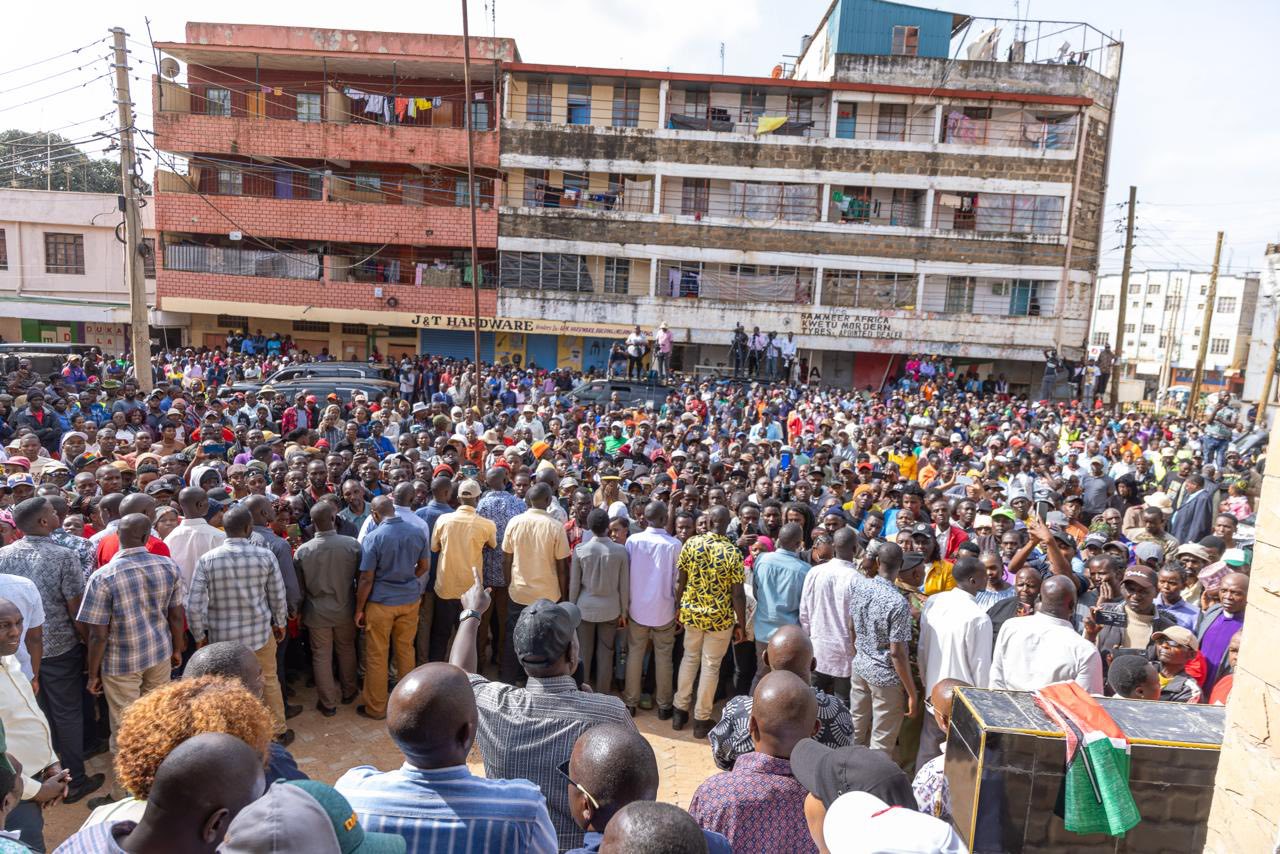
President William Ruto on Sunday rolled out a series of high-profile development pledges in Nyeri County, in what political analysts say is a strategic push to shore up support in the Mount Kenya region as the 2027 elections draw closer.
In a packed public rally, Ruto announced a string of government-backed projects and funding commitments — including affordable housing units, new market facilities, education infrastructure, and significant road upgrades — portraying them as tangible benefits delivered to local residents.
“Our focus is on projects that directly touch the lives of wananchi — housing, jobs, education and better infrastructure,” the President told cheering supporters. “Development is not a favour. It is the right of every Kenyan, regardless of how they voted.”
But beyond the development narrative, Ruto’s appearance in Nyeri carries unmistakable political undertones. The Mount Kenya region, historically a decisive bloc in national elections, has shown signs of shifting support as voters grapple with economic pressures, including elevated living costs and tax reforms introduced under Ruto’s government.
Goodies With an Eye on Votes
Political analysts say the timing and visibility of the pledges — often dubbed “goodies” in local discourse — are aimed at softening criticism of Ruto’s economic agenda and reinforcing his political base ahead of the 2027 polls.
“Delivering high-impact projects in key constituencies ahead of elections is a well-worn strategy,” said political commentator Moses Njue. “In regions like Mount Kenya where voter sentiment can make or break national ambitions, showing development results matters politically.”
Ruto highlighted funding for thousands of affordable housing units to ease shelter burdens, modern markets to boost local commerce, school hostels aimed at improving access to education and road improvements to link rural producers to major trading centres.
He also reaffirmed government support for agriculture — especially coffee and dairy sectors deeply embedded in Nyeri’s economy — and subsidies meant to cushion farmers.
“These investments are not just projects; they are proof that our government listens and delivers,” Ruto said, as supporters waved placards and chanted his name.
Mixed Reactions on the Ground
Local leaders welcomed the commitments, describing them as long-overdue and likely to stimulate economic activity. But some residents expressed guarded optimism, saying past pledges had been slow to translate into concrete change.
“I appreciate the plans, but we need timelines and real work on the ground,” said Grace Wanjiku, a Nyeri business owner. “Promises sound good, but I want to see results.”
Opposition figures have criticised what they call election-driven distribution of state resources, arguing that development should not be tied to political calendars.
“As we approach 2027, we must be vigilant that state projects benefit all citizens impartially,” said an official of a leading opposition party.
Mount Kenya: A Political Bellwether
With the 2027 elections inching nearer, political observers note that Ruto’s engagement in Mount Kenya — including Nyeri — is part of an intensified outreach to recapture momentum in a region once seen as a stronghold of his political rivals.
“By linking tangible benefits to his leadership, the President is seeking to frame the election narrative around delivery, not dissent,” said James Njoroge. “But whether that resonates with voters bruised by economic hardships remains to be seen.”


