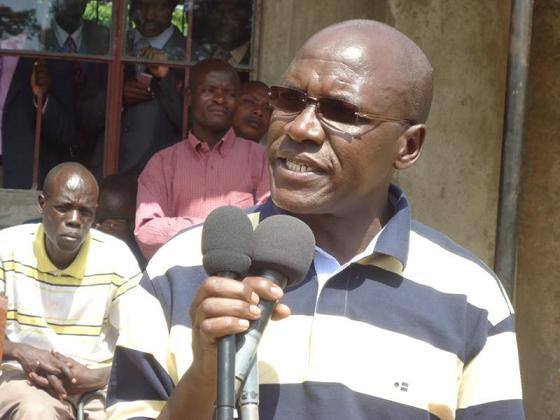
Kakamega Senator Boni Khalwale has ignited debate over the future of Kenya’s political parties after declaring that major outfits have historically collapsed with the exit of their founding leaders, extending the argument to the Orange Democratic Movement (ODM) following Raila Odinga’s political twilight.
In a series of posts on Facebook, the outspoken senator argued that Kenya’s parties have failed to survive beyond their key figures, listing what he described as a pattern of political decline. “KANU died with Moi. PNU died with Kibaki. FORD Kenya died with Wamalwa. Jubilee died with Uhuru retirement. ODM has died with Raila,” Khalwale wrote, adding that ODM Secretary-General Edwin Sifuna and other party leaders “should smell the coffee.”
Khalwale’s remarks come at a time when ODM is navigating a delicate transition following Raila Odinga’s reduced presence on the domestic political stage after years as the country’s dominant opposition figure. Raila, who has contested the presidency five times, remains influential but has increasingly taken on a statesman-like role, fueling internal debate about succession and the party’s long-term direction.
Political analysts say Khalwale’s comments tap into a longstanding weakness in Kenya’s party system, where outfits are often built around personalities rather than institutions. “Most parties here are vehicles for individual ambition. When the owner exits, the engine stalls,” said political analyst Martin Andicho. “ODM has structures, but the question is whether it can reinvent itself without Raila at the centre.”
ODM leaders have previously dismissed claims that the party is in decline, insisting it has a strong grassroots base and clear ideology. Sifuna has in the past argued that ODM is “bigger than any individual” and capable of renewing itself ahead of future elections.
However, Khalwale’s post resonated widely online, drawing sharp reactions from both supporters and critics. Some agreed with his assessment, citing internal wrangles and defections as signs of weakening parties, while others accused the senator of political provocation aimed at unsettling ODM ahead of the 2027 general election.
Historically, parties such as KANU, which dominated Kenyan politics for decades under Daniel arap Moi, struggled to regain relevance after losing power. Similar fates befell PNU after former President Mwai Kibaki’s exit and Jubilee following the retirement of Uhuru Kenyatta, lending weight to Khalwale’s argument about personality-driven politics.
As Kenya edges closer to another election cycle, the debate sparked by Khalwale underscores broader questions about political succession, party ideology, and whether Kenyan parties can outgrow the leaders who founded them.


