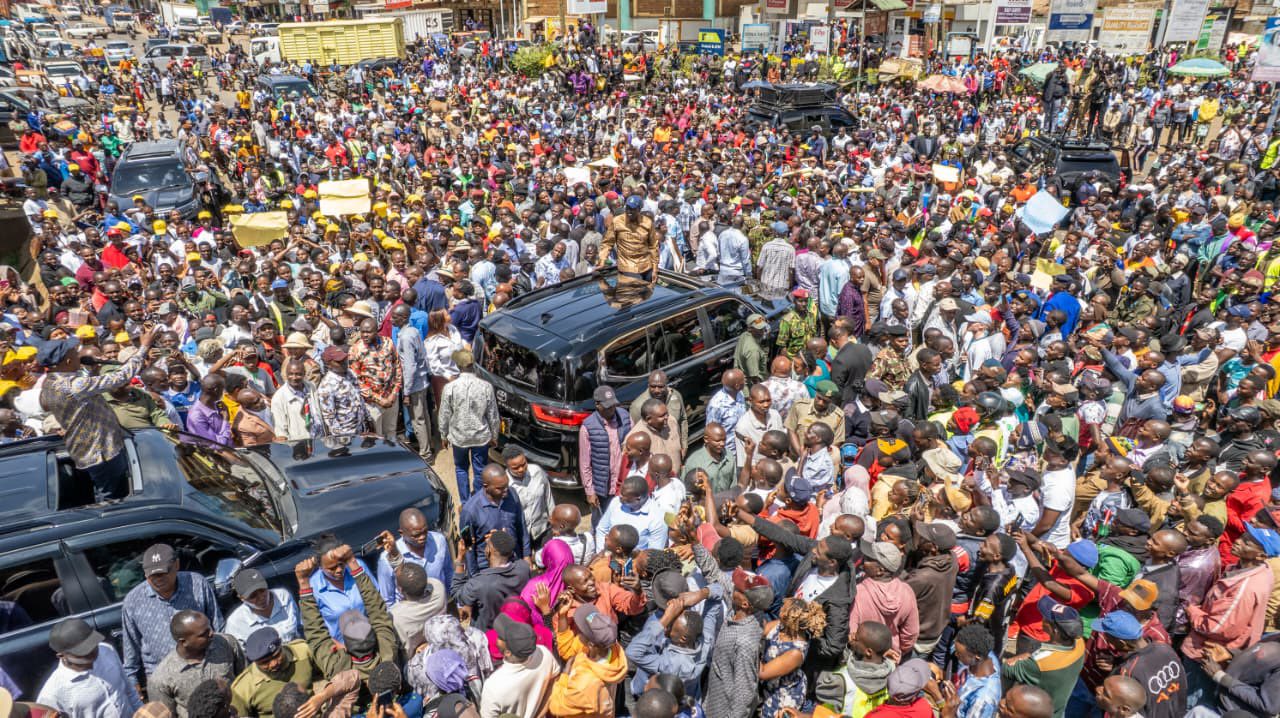
President William Samoei Ruto has rolled out a string of high-profile development pledges in Meru County this week, setting aside more than KSh10 billion for infrastructure and healthcare upgrades — commitments critics say are timed to influence voters ahead of the 2027 general elections.
Addressing residents and traders in Makutano town after presiding over the NYOTA Business Start-Up Capital disbursement at Kinoru Stadium, President Ruto outlined a bold local agenda centered on road decongestion, safer transport links and an upgraded referral hospital.
“We are changing the face of Meru and turning the town into a modern city through the construction of a KSh3 billion bypass that will significantly reduce congestion,” the President declared — a project aimed at easing traffic flow through the bustling town centre.
He further announced that construction of the long-anticipated Nithi Bridge — budgeted at KSh7 billion — will begin in February 2026, promising to curb the frequent and often fatal accidents along the Tharaka-Nithi–Meru border stretch.
“We are delivering infrastructure that not only opens up markets but saves lives,” Ruto said, adding that the bridge will unlock economic activity between Meru and neighbouring counties.
On healthcare, the President committed to elevating Meru Teaching and Referral Hospital to a Level VI facility, a move he said would bring high-level medical services closer to residents and spare patients the cost and inconvenience of travelling to Nairobi or Eldoret for specialised care.
While the development pledges have been welcomed locally, political analysts say the timing — just over a year before the 2027 polls — suggests a clear electoral angle.
“These are substantial promises targeted at key voter blocs,” said political commentator Judith Mwende. “By directing large sums into visible county projects now, the President is positioning his government as responsive and delivery-oriented at a time when voters are weighing their options.”
The NYOTA start-up capital programme — which disburses seed money to small traders and youth entrepreneurs — also featured prominently in Ruto’s Meru visit. The President urged beneficiaries to use the funds to grow sustainable businesses and create jobs.
However, opposition figures in the region argue that such high-value pledges, announced months before candidates file their papers, amount to campaigning under the guise of development.
“These are classic election goodies — big ticket announcements designed to sway voters,” said James Kirima, a local opposition organiser. “People welcome development, but the proximity to the polls is hard to ignore.”
In past election cycles, large-scale development promises have often become talking points — and sometimes sources of controversy — as political alliances and campaigns ramp up ahead of Kenya’s quadrennial vote.
As Meru prepares for the coming campaign season, the rollout and delivery of these projects will likely become central themes in both government messaging and opposition critique.


