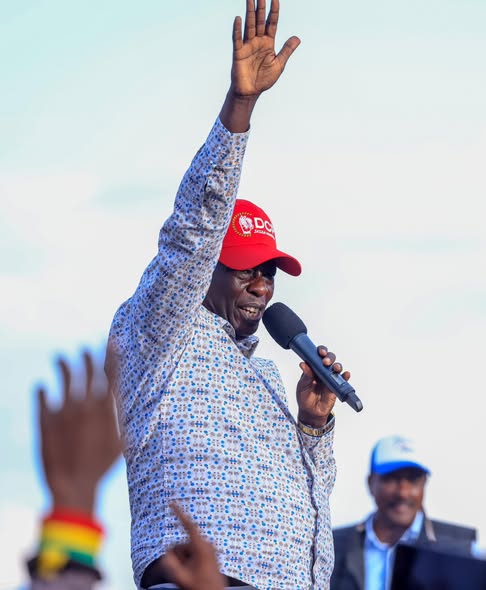
Former Deputy President Rigathi Gachagua has made a passionate appeal to Kenyans over the ongoing humanitarian crisis in northern Kenya — even as he remains a central and controversial figure in national politics following his impeachment from office.
Gachagua’s remarks came in a forceful statement highlighting the dire conditions faced by women and children in drought‑affected counties such as Mandera. He said he was “overwhelmed by the information and evidence coming through from Northern Kenya on the misery and inhuman conditions women and children endure daily, especially now the drought is ravaging the North.”
“God have mercy on these innocent children and women from Mandera,” he wrote in an impassioned message shared publicly on social media and other platforms.
The former deputy president urged collective national action, saying the suffering in the north was compounded by what he described as poor leadership and misappropriation of resources meant for development.
“They are going through unspeakable indignity, inhuman and degrading conditions while their leaders wallow in opulence and luxury using taxpayers’ money meant for development in the North,” Gachagua said, calling on all Kenyans to “rise up and speak for the North — they too are Kenyans!”
Gachagua’s intervention on the humanitarian plight comes amid his own dramatic political fall. In October 2024, Gachagua was impeached from the office of Deputy President by Kenya’s National Assembly and Senate on multiple charges, including alleged gross misconduct, abuse of office and incitement of ethnic division — making him the first holder of the office removed under the 2010 Constitution.
Following the impeachment, then–Interior Minister Prof. Kithure Kindiki was appointed and later sworn in as the new Deputy President after legal challenges were resolved.
Since his removal, Gachagua has remained active in national politics. He launched a new political party — the Democracy for Citizens Party (DCP) — positioning himself as a vocal opposition figure and potential contender in the upcoming 2027 general elections despite legal questions about his eligibility stemming from his impeachment.
His comments on the northern drought crisis, however, mark a notable shift toward humanitarian advocacy at a time when millions in arid and semi‑arid lands continue to face water shortages, food insecurity and displacement due to prolonged dry spells. Aid agencies have repeatedly warned that drought in northern Kenya is pushing vulnerable populations further into hunger, especially women and children who bear the brunt of the crisis.
Analysts say Gachagua’s pronouncements could resonate with voters beyond his traditional base as he seeks to reframe his political identity after being removed from high office. But critics argue that focusing on humanitarian appeals also serves his broader strategy to rebuild political relevance ahead of a fiercely contested electoral cycle.


