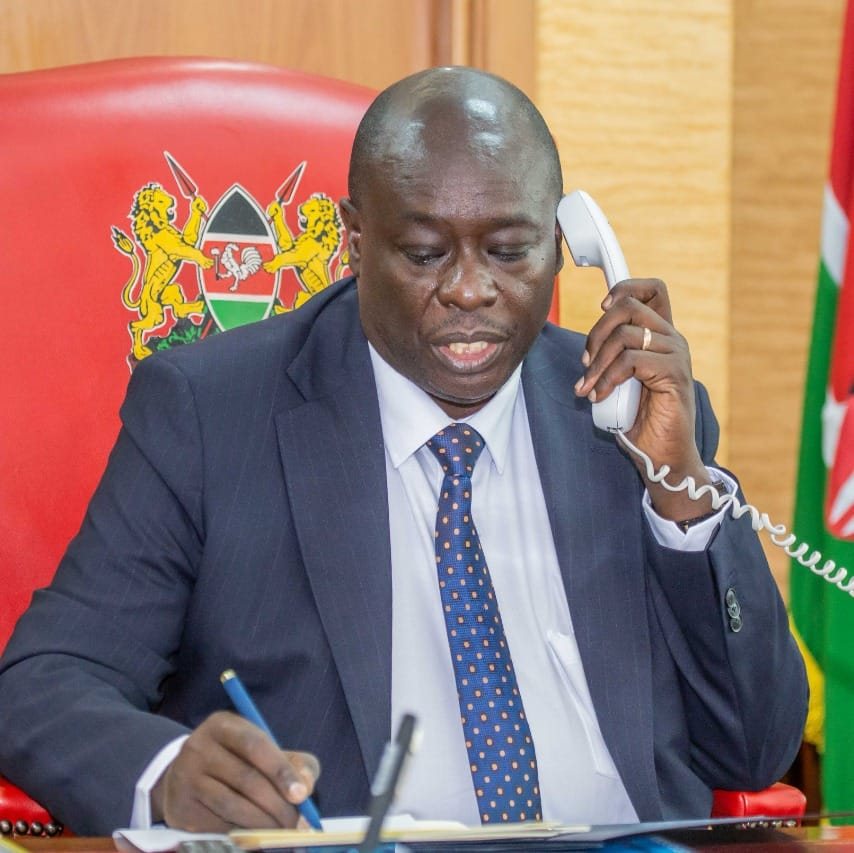
Former Deputy President Rigathi Gachagua has renewed calls for tougher accountability in the use of public funds allocated to Northern Kenya, saying the region’s leaders can no longer blame underdevelopment solely on historical marginalisation.
In a statement shared on Monday, Mr Gachagua said while Northern Kenya had for decades suffered neglect by successive governments, local leadership had also played a role in entrenching poverty and weak service delivery.
“Our commitment to ensuring accountability and transparency in the management of public funds allocated to the Northern Kenya counties remains unwavering,” he said.
He argued that communities in the region had often been “held hostage by clan elders and their own elected leaders,” who, he said, hid incompetence behind historical grievances rather than delivering development.
Mr Gachagua said the promulgation of the Constitution of Kenya 2010 marked a decisive break from the past, rendering outdated arguments based on Sessional Paper No. 10 of 1965 obsolete.
“The era in which leaders from Northern Kenya could hide their ineptitude and incompetencies behind Sessional Paper No. 10 of 1965 is firmly in the past,” he said.
According to the former deputy president, devolution and the introduction of devolved funds, the Equalisation Fund, Constituency Development Fund and increased support from development partners had fundamentally changed the region’s development trajectory.
He said these reforms had progressively and permanently addressed historical inequalities, leaving little justification for continued misuse of public resources or stalled projects.
On Friday, Mr Gachagua said he visited the office of businessman Fazul Mahamed in Karen, Nairobi, where they held discussions on what he described as the urgent need for reforms and stronger accountability frameworks in Northern Kenya.
“Today, I stopped by my friend Mr Fazul Mahamed’s office in Karen for further reflection on the urgent demand for reform and accountability in Northern Kenya,” he said.
His remarks come amid growing scrutiny over the management of devolved funds, with oversight bodies and civil society groups increasingly flagging corruption, weak governance and political interference in several counties.
Mr Gachagua said sustainable development in Northern Kenya would depend on leaders embracing transparency and being held accountable for the resources entrusted to them by the public.


