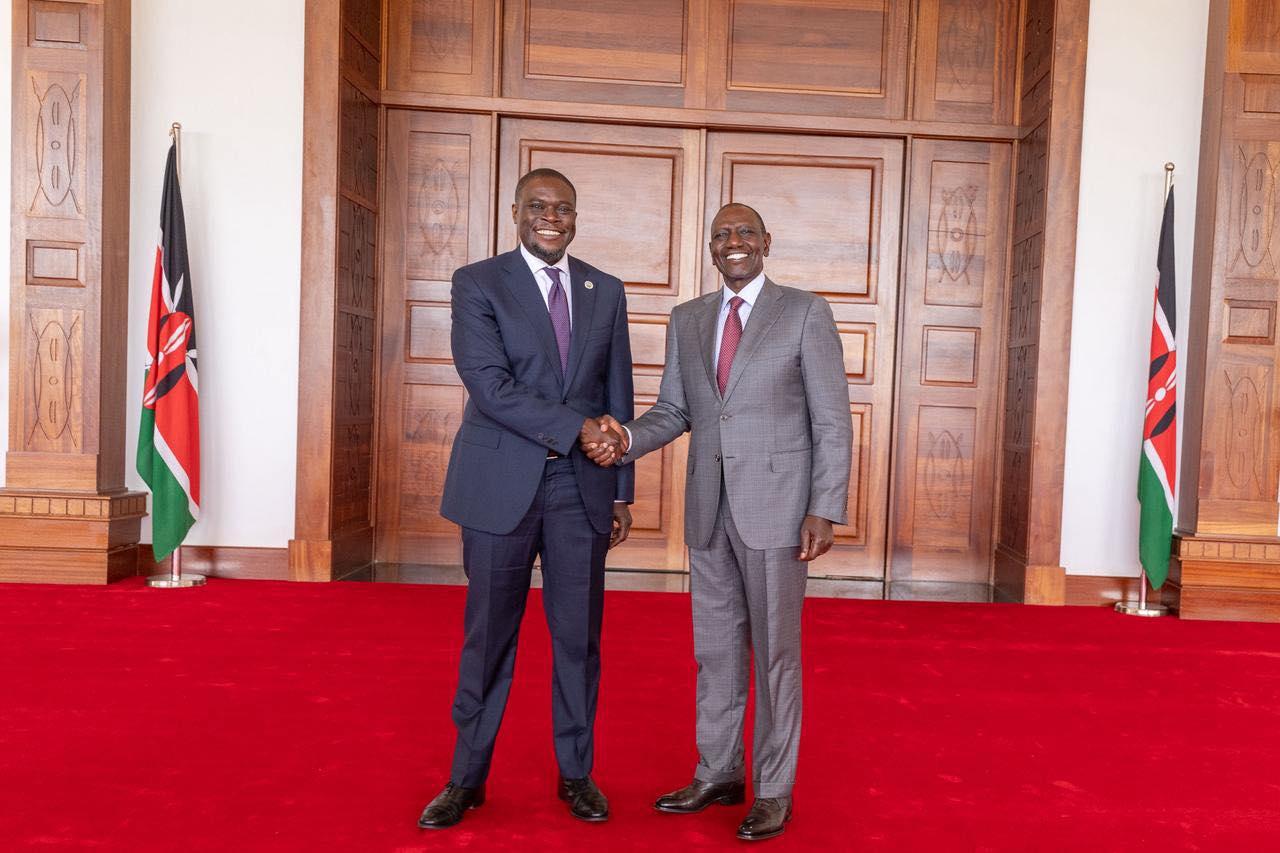
Johnson Sakaja on Tuesday signed a Sh80 billion cooperation agreement with the National Government, in a move he said will unlock critical infrastructure funding for the capital without undermining devolution.
The agreement was signed alongside President William Ruto and is anchored on Section 6 of the Urban Areas and Cities Act, which allows structured collaboration between the two levels of government in managing urban areas.
Speaking after the signing, Sakaja described the deal as “historic”, saying it recognises Nairobi’s unique status as Kenya’s capital and economic hub.
“Today, I joined the President to sign a historic cooperation agreement with the National Government unlocking Sh80 billion for the city,” Sakaja said. “The agreement does not transfer county functions nor weaken devolution. Instead, in the true spirit of devolution, it is a lawful statutory collaboration expressly anchored in law.”
The governor moved to calm concerns that the arrangement could claw back county powers, insisting that the deal does not hand over Nairobi’s constitutional mandate to the national government. In recent years, similar agreements — including the 2020 transfer of key functions to the Nairobi Metropolitan Services — sparked political debate over the future of devolution in the capital.
Under the new framework, the funds will target roads and housing infrastructure, modern waste management systems, improved water and sanitation services, as well as street lighting and public safety.
City Hall has struggled with mounting garbage, aging sewer systems, traffic congestion and insecurity in informal settlements, challenges that residents say have eroded Nairobi’s standing as a regional business hub.
Sakaja said the partnership would accelerate stalled projects and inject fresh capital into priority sectors that directly affect residents’ daily lives.
“This agreement will support critical priorities that directly affect daily lives, including roads and housing infrastructure, modern waste management systems, improved water and sanitation services, street lighting and public safety,” he said.
President Ruto has in recent months pledged increased support for Nairobi, arguing that the capital requires special attention due to its population pressure and role as the country’s commercial nerve centre.
Political analysts say the deal could also strengthen cooperation between the county and State House at a time when the government is under pressure to deliver visible development projects ahead of the next election cycle.
Sakaja, however, framed the agreement as service-driven rather than political.
“I remain committed to service delivery, the resolve to build a city better than we found it and to capture the aspirations of our people,” he said.
Details on how the Sh80 billion will be disbursed, timelines for implementation and oversight mechanisms were not immediately made public.
As Nairobi residents await tangible change, the success of the agreement will likely be judged not by signatures on paper, but by smoother roads, cleaner estates and safer streets in the months ahead.


