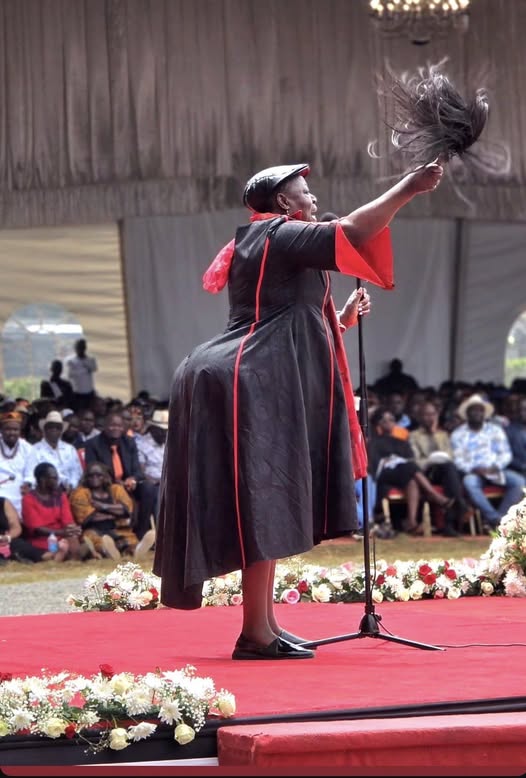
Kisumu Woman Representative Ruth Odinga on Wednesday sought to steady the Orange Democratic Movement’s internal tremors, calling for unity and structured negotiations ahead of next year’s elections as factional undercurrents threaten to weaken the party in its traditional stronghold.
Speaking after a morning meeting with Kisumu Central Constituency ODM delegates and sub-county executives in the heart of Kisumu City, Odinga dismissed claims that she is at odds with ODM Party Leader Oburu Oginga, insisting her push for cohesion is being misinterpreted by political rivals within the party.
“My stand has not changed: I want one strong united ODM Party,” she said, framing the moment as critical for a movement long seen as the political heartbeat of the lakeside region. “We need to collapse ‘Linda Ground’ and ‘Linda Wananchi’ and whatever other faction out there into one formidable force.”
Her remarks come amid simmering divisions within ODM following a leadership transition that has reshaped the party’s power structure. The emergence of rival camps — loosely organized around competing slogans and generational interests — has sparked quiet battles for control of grassroots networks in Kisumu and beyond.
Odinga argued that time is both an opportunity and a warning. Citing provisions of the Political Parties Act, she noted that political parties have until May 2027 — or three months before the general election — to deposit their pre-election coalition agreements.
“That means we must make use of the available time to put our Orange house in order,” she said, signaling that unity at home is a prerequisite for any meaningful coalition talks.
Her comments appear aimed at positioning ODM as a disciplined and strategic player in what is expected to be a crowded and unpredictable electoral season. Analysts say that without internal cohesion, the party risks losing bargaining power in national negotiations.
But it is her relationship with Oburu that has fueled the most speculation.
“I have been accused of disrespecting our Party Leader, Dr. Oburu Oginga. How does calling for ‘wantam’ and ‘tutam’ proponents to come together and work as a single voice amount to disrespect?” she posed.
Odinga was emphatic that there is no personal feud. “Dr. Oburu is the ODM Party Leader and everyone in ODM must respect that. I speak to him regularly as the Party Leader and as my elder brother over a variety of issues.”
In a characteristically candid tone, she brushed off claims of rivalry with humor. “I am an old woman. Where do I get the energy to fight Youth Leader?” she said, suggesting that those peddling the narrative of infighting are the real threat to party stability.
Those remarks reflect a broader struggle within ODM — balancing generational renewal with loyalty to long-standing leadership figures. Calls for greater youth inclusion have grown louder in recent months, particularly in urban constituencies like Kisumu Central, where younger party members are demanding a bigger role in decision-making.
Odinga acknowledged that concern, saying the party must “figure out as a party the inclusion of youth voices in party affairs across the party leadership hierarchy.”
For many in Kisumu, where ODM’s political identity is deeply intertwined with the Odinga family legacy, any hint of division carries symbolic weight. The city has often served as a barometer of the party’s internal mood.
Thusday’s meeting, though routine on the surface, underscored the stakes. Delegates are preparing for county-level elections later this week, contests that will determine who controls critical grassroots machinery ahead of broader coalition talks.


