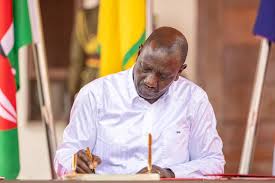
President William Ruto has announced that the government plans to compensate victims of past protests across the country by June this year.
Speaking during a joint parliamentary group meeting involving lawmakers from the United Democratic Alliance and the Orange Democratic Movement, the Head of State said the compensation exercise is already underway and will be completed once the legal and administrative procedures are finalised.
Ruto explained that although the process has taken time, the government wanted to ensure it was handled in a lawful and transparent manner.
According to the President, the state has already worked with the Kenya National Commission on Human Rights and the Independent Policing Oversight Authority to identify individuals and families affected by protest-related incidents.
He said the list includes victims from demonstrations dating back to 2017.
Ruto acknowledged that financial compensation cannot replace the lives lost during protests but said the government has a responsibility to support the affected families.
The President also revealed that the government has set aside funds for the exercise, with Parliament expected to approve approximately Sh2 billion to facilitate payments to victims.
The compensation programme had previously stalled after legal challenges were filed in court. However, Ruto said the courts have since issued directions on how the process should proceed.
Following the court’s guidance, the government last week gazetted a victims’ compensation panel tasked with overseeing the implementation of the programme.
Beyond the payments, the President said the government is also considering measures to better protect people participating in demonstrations in the future.
He emphasised that the right to protest is protected under the Constitution and should be respected.
Ruto added that the government intends to ask the Kenya National Commission on Human Rights to lead efforts in proposing legislation aimed at safeguarding protesters’ rights.
He said allowing an independent body to spearhead the process would help avoid a conflict of interest if the Executive were to draft the law itself.


