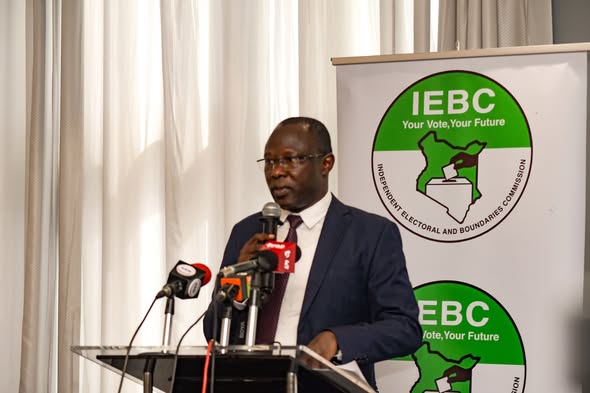
The Independent Electoral and Boundaries Commission (IEBC) today hosted the Kenya National Commission on Human Rights (KNCHR), led by Chairperson Claris Ogangah, in a meeting aimed at exploring potential areas of collaboration to enhance electoral processes in Kenya. The engagement underscores the importance of partnerships between electoral and human rights institutions in ensuring credible, transparent, and inclusive elections.
The delegation was received by IEBC Chairperson Erastus Ethekon, who welcomed the KNCHR team and emphasized the significance of institutional cooperation in promoting democratic governance. Ethekon briefed the delegation on the Commission’s recent achievements, including the successful conduct of by-elections in various counties, improvements in voter registration systems, deployment of ICT tools in election management, and preparations for upcoming polls. He also highlighted initiatives aimed at improving stakeholder engagement and public trust in the electoral system.
“We all play complementary roles in strengthening democracy, often working alongside civil society and other stakeholders within the broader human rights ecosystem,” Ethekon said. “Partnerships such as this allow us to share knowledge, address challenges collectively, and ensure that our electoral processes reflect the will of the people.”
KNCHR Chairperson Claris Ogangah lauded the progress Kenya has made in recent years in strengthening electoral reforms, noting that independent oversight and collaboration between institutions are vital to building public confidence. “Our position remains that we must continue working together to strengthen trust, promote accountability, and ensure that our electoral processes meet the expectations of the people,” Ogangah said.
Kenya’s electoral system has undergone significant reforms over the last decade, following a history of contested elections and widespread public protests over irregularities. The 2010 Constitution introduced measures to safeguard transparency, including the establishment of IEBC, which is tasked with conducting elections, maintaining the voter register, and ensuring fair representation. KNCHR, established under the Kenya National Commission on Human Rights Act, monitors human rights and ensures that democratic principles are upheld during political processes.
The discussions focused on strategies to enhance voter education, civic participation, and the protection of human rights within the electoral process. Both parties explored areas where their mandates overlap, including monitoring electoral conduct, addressing complaints of electoral irregularities, and supporting initiatives that foster transparency and inclusivity.


