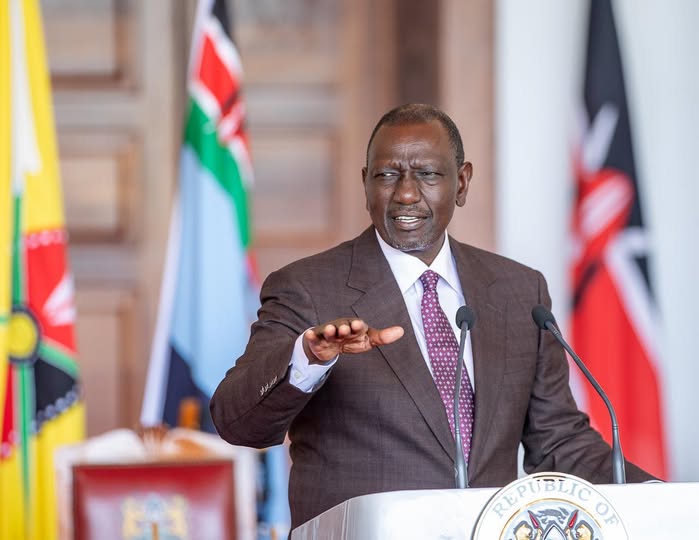
President William Samoei Ruto on Tuesday sought to anchor his 2027 re-election bid on economic performance, unveiling Sh374 billion ($2.9 billion) in fresh investment commitments during the Kenya International Investment Conference in Nairobi.
Speaking alongside Daniel Chapo—who assumed office in January 2025 after rising through the ruling FRELIMO party and previously serving as a provincial governor—Ruto said his administration’s reforms were positioning Kenya as a “premium investment destination.”
“We have rolled out far-reaching reforms to strengthen Kenya’s investment competitiveness, improve the ease of doing business, and create a more enabling, investor-friendly environment,” Ruto said, citing tax restructuring, energy tariff reductions, and the establishment of a One-Stop Investment Centre.
He added that the investments, spanning agriculture, ICT, manufacturing, healthcare, energy, and real estate, would create jobs and expand economic opportunities, forming a key plank of his administration’s development record ahead of the 2027 General Election.
The President framed the announcement as evidence that his economic agenda is bearing fruit, even as political alignments begin to crystallize.
However, the move drew criticism from Nairobi Senator Edwin Sifuna, who has consistently faulted the government’s economic approach, arguing in previous statements that Kenyans are yet to feel tangible relief despite repeated announcements of large-scale investments and reforms.
At the same time, former Deputy President Rigathi Gachagua has escalated his attacks on the administration following his fallout with Ruto, accusing it of “State capture, rampant corruption, and self-serving interests,” and claiming that powerful individuals are benefiting disproportionately from government-linked deals.
Gachagua has vowed to continue exposing what he describes as entrenched networks of influence, setting the stage for a bruising political contest as former allies turn into fierce rivals.
Analysts say the competing narratives—Ruto’s emphasis on macroeconomic stability and investment inflows versus his critics’ focus on cost-of-living pressures and governance concerns—are likely to define the 2027 race.
“The election will largely revolve around the economy,” said political analyst Johnston Bichachi. “If these investments translate into jobs and visible change, that strengthens the President’s hand. If not, it hands the opposition a powerful campaign message.”
The Nairobi forum, which brought together investors from nine countries, also signals Kenya’s push to deepen regional and continental economic ties, with Chapo’s presence underscoring growing cooperation between East and Southern Africa.


