President William Samoei Ruto has renewed his pledge to transform Kenya into a “Singapore of Africa,” using a fresh diplomatic engagement with the Asian city-state to reinforce his administration’s development agenda ahead of the 2027 elections.
Speaking in recent political rallies, Ruto has repeatedly invoked Singapore as a model of rapid economic transformation, efficient governance and world-class infrastructure—an ambition he says Kenya can replicate through sustained reforms and strategic partnerships.
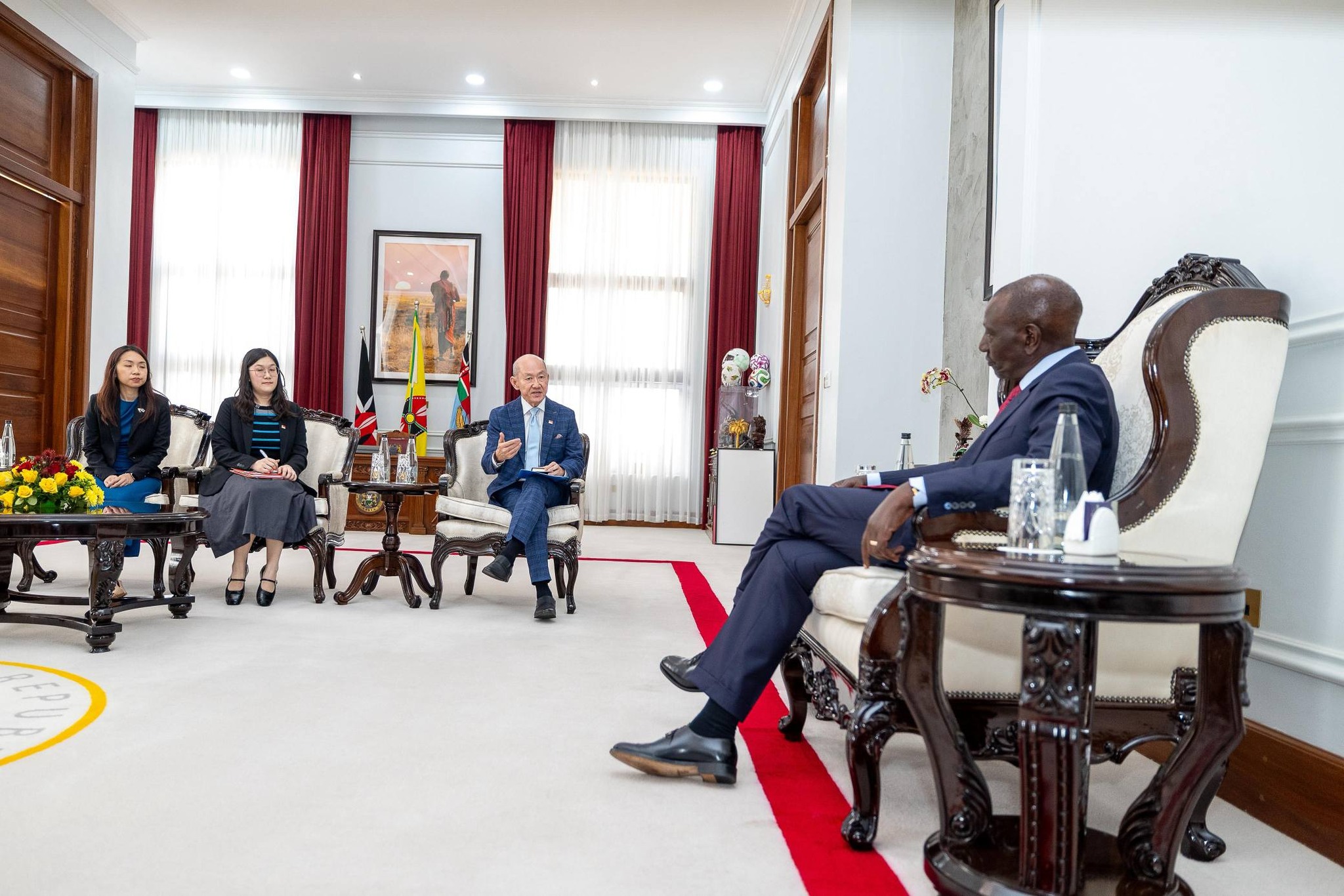
The President on Thursday hosted Singapore’s Non-Resident High Commissioner to Kenya, Ernest Kan, at State House, Nairobi, in a meeting that underscored growing ties between the two countries. Kan delivered a message from Singaporean President Tharman Shanmugaratnam ahead of celebrations marking 35 years of diplomatic relations between Nairobi and Singapore.
In a statement after the meeting, Ruto said Kenya and Singapore maintain “a close and mutually beneficial diplomatic relationship,” anchored on shared interests in trade, investment, infrastructure, logistics, digital transformation and human capital development.
“Singapore holds a special place in our national development journey. We continue to draw lessons from its remarkable success, particularly rapid industrialisation, as we advance our own ambition to achieve the status of a first-world economy,” Ruto said.
The remarks mirror his campaign-style messaging on the domestic front, where he has framed his presidency as a vehicle for economic turnaround, promising to lift Kenya into the league of developed nations.
Singapore’s transformation—from a resource-scarce island to a global financial and logistics hub—has long been cited by African leaders as a blueprint for growth. Ruto’s administration has increasingly leaned on that comparison to justify policy shifts in sectors such as housing, infrastructure development and digital innovation.
Analysts say the renewed emphasis on Singapore comes at a politically strategic time, as the President seeks to solidify his economic credentials amid criticism from opposition figures over the rising cost of living and public debt.
Nairobi Senator Edwin W. Sifuna, a vocal critic of the administration, has previously questioned the feasibility of such comparisons, arguing that governance challenges and corruption could undermine the vision.
At the same time, former Deputy President Rigathi Gachagua has also accused the government of failing to address systemic issues affecting ordinary Kenyans, adding to the growing political pressure on Ruto’s economic agenda.
Despite the criticism, the President has maintained that international partnerships—such as the one with Singapore—will play a crucial role in accelerating Kenya’s transformation.
The latest diplomatic engagement signals a continued effort by the government to position Kenya as an attractive destination for global investment, while borrowing policy lessons from one of the world’s most cited development success stories.


