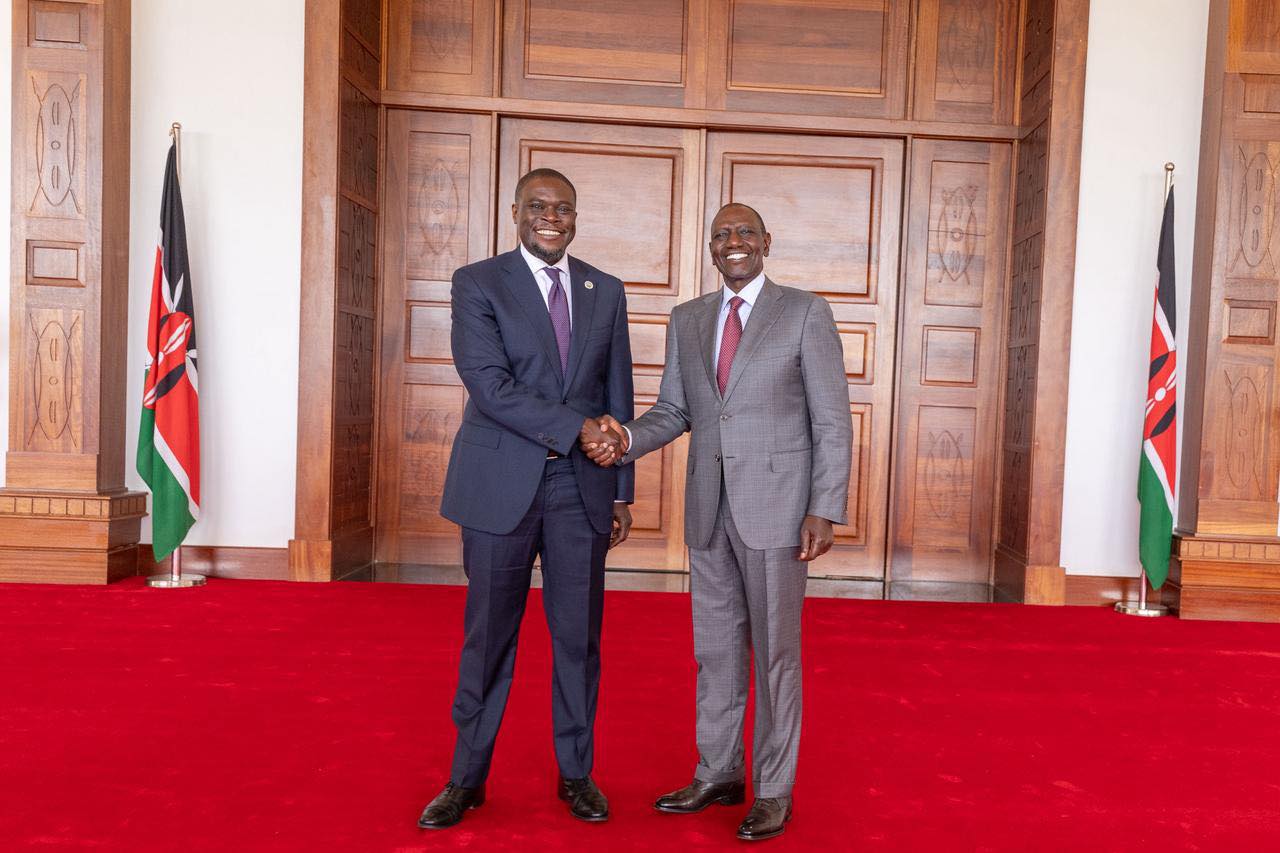
President William Samoei Ruto on Friday escalated his push to reshape the capital, unveiling progress updates on an ambitious urban renewal programme that is increasingly becoming a political test of his administration’s ability to deliver on flagship promises.
The President said the government is working with Nairobi City County Government to transform Nairobi into a “modern, clean and orderly city,” through coordinated projects spanning waste management, transport infrastructure, housing and river regeneration.
He made the remarks at State House Nairobi after receiving a progress report on the implementation of the cooperation agreement between the national government and the county government.
According to Ruto, more than 40 trucks are already deployed to clear accumulated waste across the city, with an additional 150 expected to be mobilised within three weeks under a coordinated waste management plan.
The President also announced the installation of over 40,000 solar and smart streetlights, alongside the rehabilitation of 10,000 existing ones, in what officials describe as a bid to improve security and extend economic activity into the night economy.
In the transport sector, he said 247 kilometres of roads are being constructed or rehabilitated with drainage and lighting components, with 63 kilometres already underway and about 77 per cent completion reported in ongoing sections.
Ruto further highlighted expansion works at the Ng’ethu–Gigiri water system, which he said will increase supply by 51,000 cubic metres daily, alongside continued upgrades under the Nairobi Rivers Regeneration Programme.
He pointed to early works along the Gikomba Market riverfront as part of a broader environmental clean-up and redevelopment drive that also includes the planned construction of a modern market for about 5,000 traders.
The President said the new Gikomba Market is expected to reduce congestion, improve safety and minimise recurring fire incidents that have historically devastated one of the city’s largest trading hubs.
However, the ambitious programme is increasingly taking on a political dimension, with critics questioning the speed of implementation and whether the projects will match the scale of public expectations in a city long plagued by infrastructure breakdowns.
Opposition voices have in recent weeks accused the administration of prioritising announcements over delivery, arguing that Nairobi’s transformation agenda will ultimately be judged not by progress reports but by visible change on the ground.


