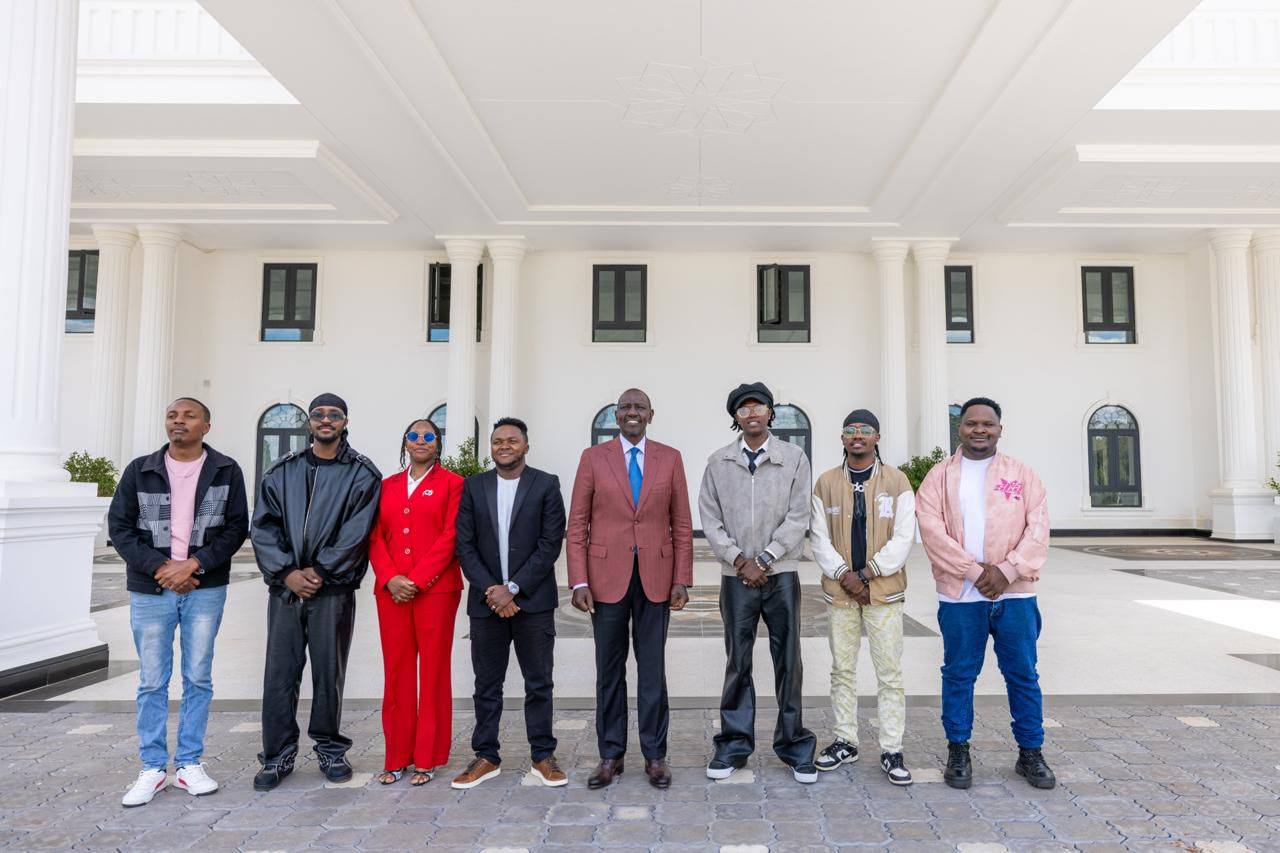
President William Samoei Ruto has moved to position the government at the centre of Kenya’s troubled creative industry, meeting Gengetone and Urbantone artistes at State House Nairobi in talks that exposed long-standing disputes over ownership, contracts and control of music rights.
The meeting comes amid growing concern over the exploitation of young artistes in an industry increasingly shaped by digital platforms and foreign distribution deals, but weak on enforcement of intellectual property protections.
Artistes told the President they had lost rights to more than 700 songs through what they described as questionable contracts with foreign entities. Among the works cited was “Sipangwingwi” by Exray, a hit that gained political traction during the 2022 election period.
The claims have reignited debate over who benefits from Kenya’s fast-growing creative economy, with artistes arguing that they are being locked out of profits generated from their own work.
Ruto said the government would step in to protect creators, adding that legal support had been arranged for the affected artistes to pursue their cases in court.
“It is regrettable that our young creatives continue to face exploitation despite their immense talent and contribution to our cultural identity,” he said.
The President also directed the National Assembly, through the Majority Leader, to fast-track the Creative Economy Bill 2026 alongside broader copyright reforms aimed at strengthening protection of intellectual property rights.
The proposed reforms are expected to target contract enforcement, royalty collection and distribution mechanisms, areas that artistes and industry players say have long been exploited by intermediaries.
Ruto further announced the establishment of a digital portal on the e-Citizen platform to support royalty collection and distribution, in what officials say is aimed at improving transparency and ensuring artistes are paid for their work.
The intervention places the creative industry squarely within the government’s broader political and economic agenda, with the sector increasingly viewed as both a source of jobs and a powerful tool of youth engagement.
However, critics argue that successive governments have often engaged the creative sector through high-profile interventions without fully resolving structural weaknesses that continue to disadvantage artistes.
The meeting at State House signals a more direct role by the administration in shaping the future of the industry, even as copyright disputes move into courts and Parliament.


