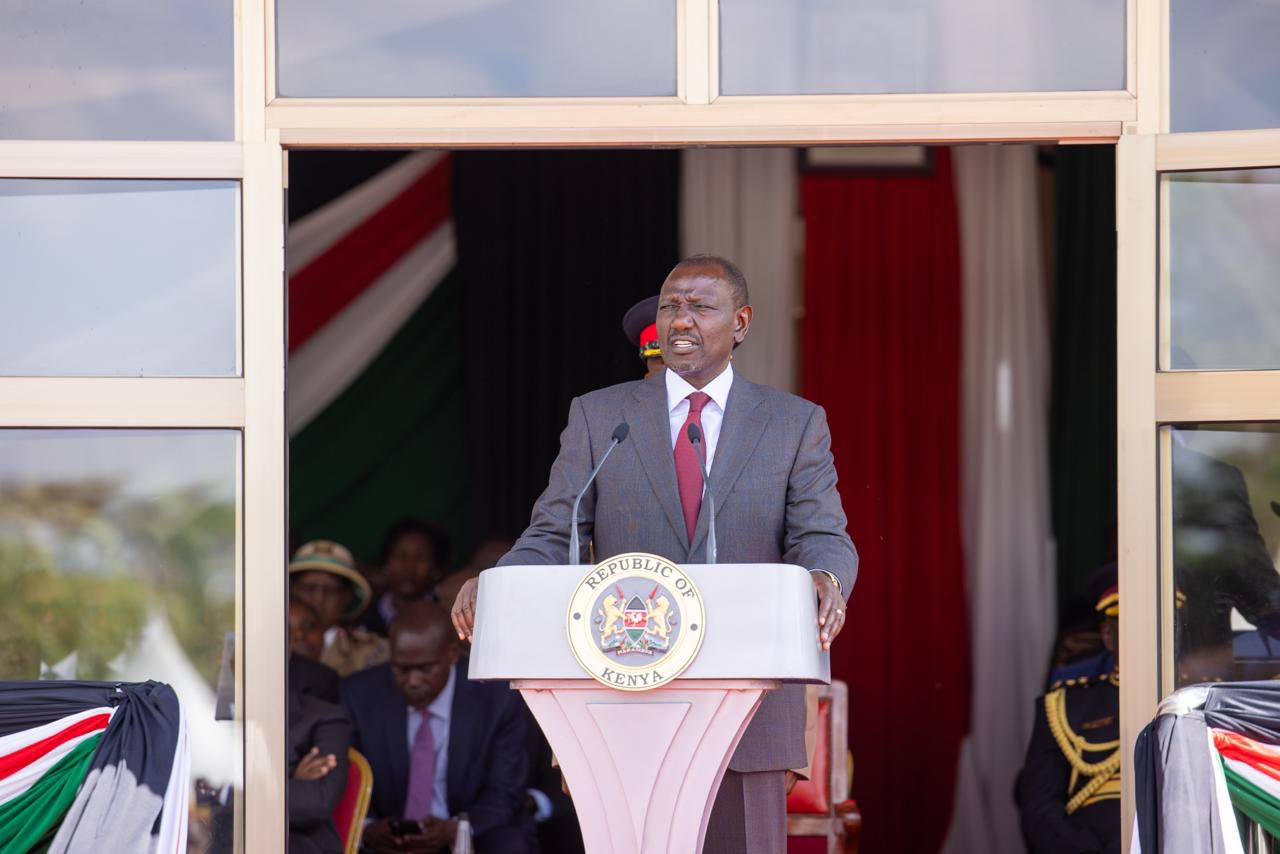
President William Samoei Ruto has signed into law a measure reducing Value Added Tax on fuel from 16 per cent to 8 per cent, a decision that not only seeks to cushion Kenyans from rising costs but also underscores the growing political pressure on his administration.
The President assented to the Value Added Tax (Amendment) Bill, 2026, at State House, Nairobi, describing it as an urgent response to economic shocks triggered by conflict in the Middle East.
“We will do everything possible to cushion Kenyans from the economic shocks arising from the conflict in the Middle East,” Ruto said, adding that rising fuel prices have a ripple effect on the cost of basic goods and services.
The tax cut will run for 90 days, with a provision allowing extension if global oil prices remain volatile.
But beyond the economic argument, the move lays bare the political balancing act facing Ruto, who swept into office in 2022 on a promise to ease the burden on ordinary Kenyans but has since overseen a series of tax increases that have triggered public anger.
Fuel prices have become a lightning rod for that frustration, with critics accusing the government of using taxation to plug budget deficits while shifting the burden to consumers. The VAT on fuel—initially introduced under previous administrations—has remained a contentious issue, often cited as a key driver of inflation.
Opposition leaders, including Nairobi Senator Edwin Sifuna, have in recent weeks accused the government of misleading the public on fuel pricing, arguing that official explanations do not match the reality at the pump.
Sifuna has warned that inconsistent government communication risks deepening public distrust, framing the fuel debate as part of a broader credibility crisis facing the administration.
Ruto’s latest move, while likely to offer temporary relief, also reflects mounting political pressure as the cost of living continues to dominate public discourse. Analysts say the decision to halve VAT—rather than remove it entirely—signals an attempt to strike a compromise between easing public anger and protecting government revenues.
The speed with which the National Assembly of Kenya passed the Bill—within a single day—has also drawn scrutiny, with some critics questioning whether adequate debate was sacrificed in favour of political expediency.


