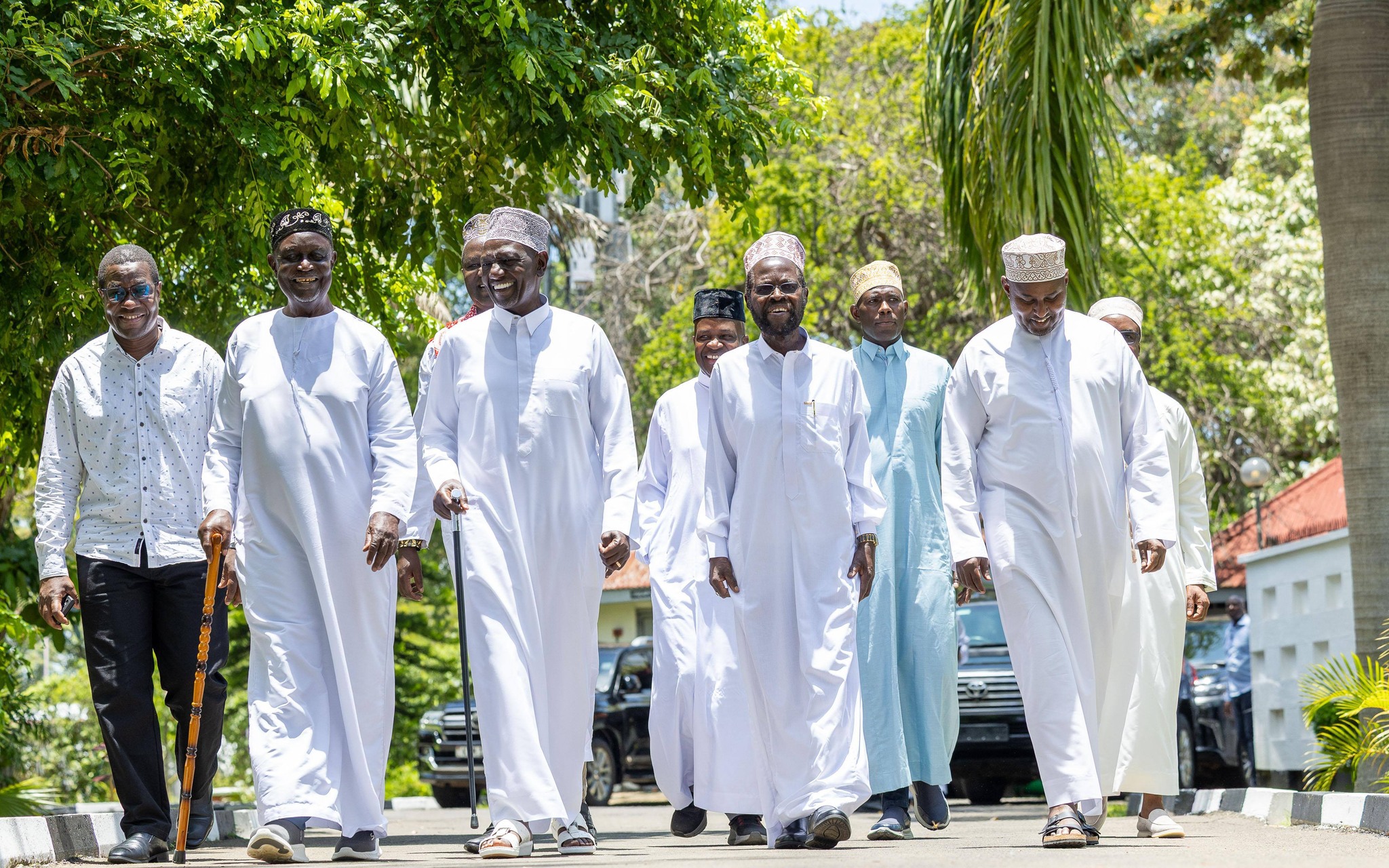
President William Samoei Ruto used a public event in Mandera County to push a message of national unity, but critics say the remarks ring hollow against a backdrop of growing political friction and insecurity.
Speaking during a thanksgiving ceremony for Banissa MP Ahmed Maalim Hassan, Ruto framed unity as the country’s “greatest strength” and urged Kenyans to reject divisive politics.
“Our unity as a nation is our greatest strength. It is the foundation of our stability, our progress, and our shared future. We must, therefore, reject anything that seeks to divide us,” he said, adding that his administration is working with leaders across the country to deliver its development agenda.
But opposition figures and political analysts have questioned the sincerity of the message, pointing to what they describe as increasing intolerance and the rise of politically linked violence.
Some critics argue that calls for unity must be matched by firm action against leaders accused of sponsoring or enabling violence. Others say the government has been selective in enforcing the law, creating what they term a climate of impunity.
“There is a contradiction between the unity message and what Kenyans are experiencing on the ground,” said a Nairobi-based political analyst. “You cannot speak about cohesion while violence and intimidation persist without accountability.”
Opposition voices have also accused the administration of using development rhetoric to consolidate political support, particularly in regions that have historically felt marginalised.
The remarks come at a time when political temperatures remain high, with rival camps trading accusations over governance, security, and the direction of the country. Recent incidents of unrest in parts of the country have further intensified the debate on the government’s commitment to maintaining order while safeguarding political freedoms.
Ruto’s emphasis on working “with leaders across the country” has been interpreted by some as an attempt to project inclusivity, even as divisions deepen within the political landscape.
His visit to Mandera County — a region often at the periphery of national politics — also carries political significance, as the administration seeks to expand its influence and reinforce its development agenda ahead of future political contests.


