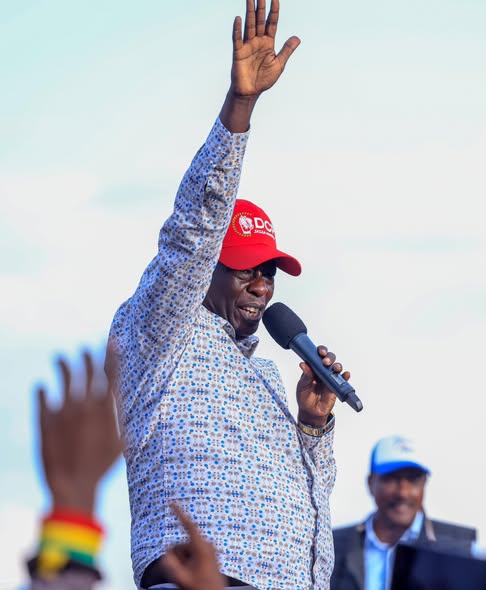
Former Deputy President Rigathi Gachagua has escalated his criticism of President William Samoei Ruto’s administration, accusing it of presiding over a “punitive regime” and urging Kenyans to unite against what he described as harmful economic policies.
Speaking after a political gathering in Maragua, Murang’a County, Gachagua cast citizens resisting the government as “true heroes,” linking their frustrations to the rising cost of living.
“The true heroes of our nation are standing to defend the citizens of Kenya against this punitive regime,” he said. “Unkindly senseless are the elite leaders caring not about the hard and disturbing economy they have manufactured through bad policies.”
Gachagua and Ruto were once close political allies, running on a joint ticket in the 2022 General Election that swept to power on a populist platform centred on uplifting ordinary Kenyans. But their relationship has since fractured, with Gachagua increasingly emerging as one of the most vocal critics of the very administration he helped bring to office.
The fallout has played out publicly, with both camps trading accusations over leadership, regional influence, and the direction of government policy—particularly on taxation and the cost of living.
In Maragua, Gachagua called for unity among Kenyans, arguing that collective action was necessary to reclaim what he termed the country’s founding ideals of equality, equity, and the rule of law.
The meeting brought together several leaders, including DPL Cleophas Malala, Gatanga MP Edward Muriu, Embakasi North MP James Gakuya, Murang’a Senator Joe Nyutu and Kiambu Senator Karungo wa Thang'wa, signalling what analysts describe as a growing political formation ahead of the 2027 election.
On the ground, many Kenyans say their frustrations are less about political rivalries and more about daily survival.
“We were told life would be better, but everything has gone up—food, fuel, school fees,” said Peter Karanja, a boda boda rider in Murang’a. “These leaders should stop fighting and fix the economy.”
Mary Wanjiku, a small-scale trader in Maragua, said government policies have made it harder to sustain her business. “Taxes are too high, and customers don’t have money. We are suffering. Whoever is in charge must listen to the people,” she said.
Such sentiments have become increasingly common across the country, as households grapple with high prices of basic commodities and new tax measures introduced in recent years.
Critics of the government argue that its economic policies have placed a disproportionate burden on ordinary citizens, while supporters maintain that the measures are necessary to stabilise the economy and reduce public debt.
Gachagua’s remarks tap into this growing discontent, positioning him alongside citizens struggling with the cost of living, even as questions linger about his role in shaping the same policies during his time in office.
Analysts warn that the sharp rhetoric risks deepening political divisions, particularly in the Mount Kenya region, a key battleground where both Gachagua and Ruto are seeking to consolidate influence ahead of the next election cycle.


