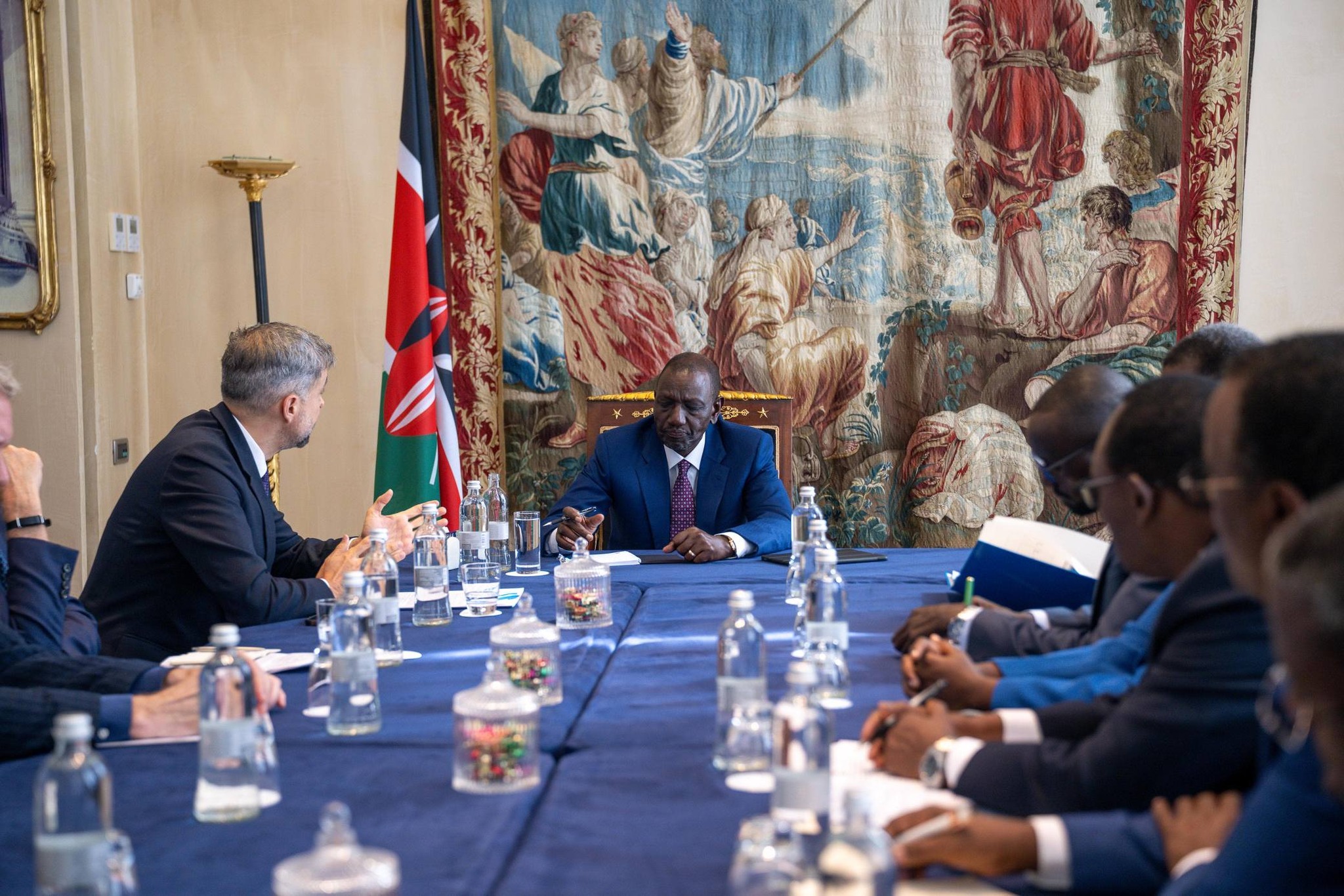
President William Ruto has stepped up his focus on agriculture, unveiling fresh financing commitments as he seeks to consolidate support among rural voters ahead of the 2027 General Election.
Speaking during a meeting with Alvaro Lario in Rome, the Head of State said his administration was prioritising the sector as a key driver of economic growth, job creation and poverty reduction.
“Agriculture is a critical sector that secures our food security and is the largest employer in Kenya,” Mr Ruto said. “We are committed to assembling tools that will empower our farmers with better incomes and enhance their capacity to produce more and innovate.”
The President disclosed that Kenya, in partnership with the International Fund for Agricultural Development (IFAD), had secured $40 million (about Sh5.2 billion) to boost the dairy sector. He also welcomed plans for a second phase of funding worth $263 million (Sh34 billion) targeting small-scale farmers over the next three years.
The investments are expected to support agricultural value chains, improve access to credit and strengthen resilience among farmers grappling with high input costs and erratic weather.
However, the renewed push on agriculture is also being viewed through a political lens, coming at a time when President Ruto is under pressure over the rising cost of living and waning support in some regions.
Analysts say the focus on small-scale farmers—who form a significant voting bloc—signals an attempt by the President to shore up his grassroots base as the 2027 polls begin to take shape.
“Agriculture remains the most direct way for any administration to connect with ordinary Kenyans,” said political analyst James Murithi. “By targeting farmers, the President is not just addressing the economy, but also speaking to a constituency that will be crucial in the next election.”
The Head of State has in recent months intensified engagements with international partners to unlock funding for key sectors, even as critics question whether the benefits of such programmes are reaching ordinary citizens.
Opposition leaders have accused the government of overpromising on economic reforms, arguing that many households are yet to feel relief despite increased borrowing and external support.
But Mr Ruto maintained that his administration’s bottom-up economic model is on course, insisting that investments in agriculture will play a central role in transforming livelihoods and stabilising the economy.
With the 2027 contest still some distance away, the battle for influence in the countryside appears to be quietly gathering pace, with agriculture once again emerging as a central campaign issue.


