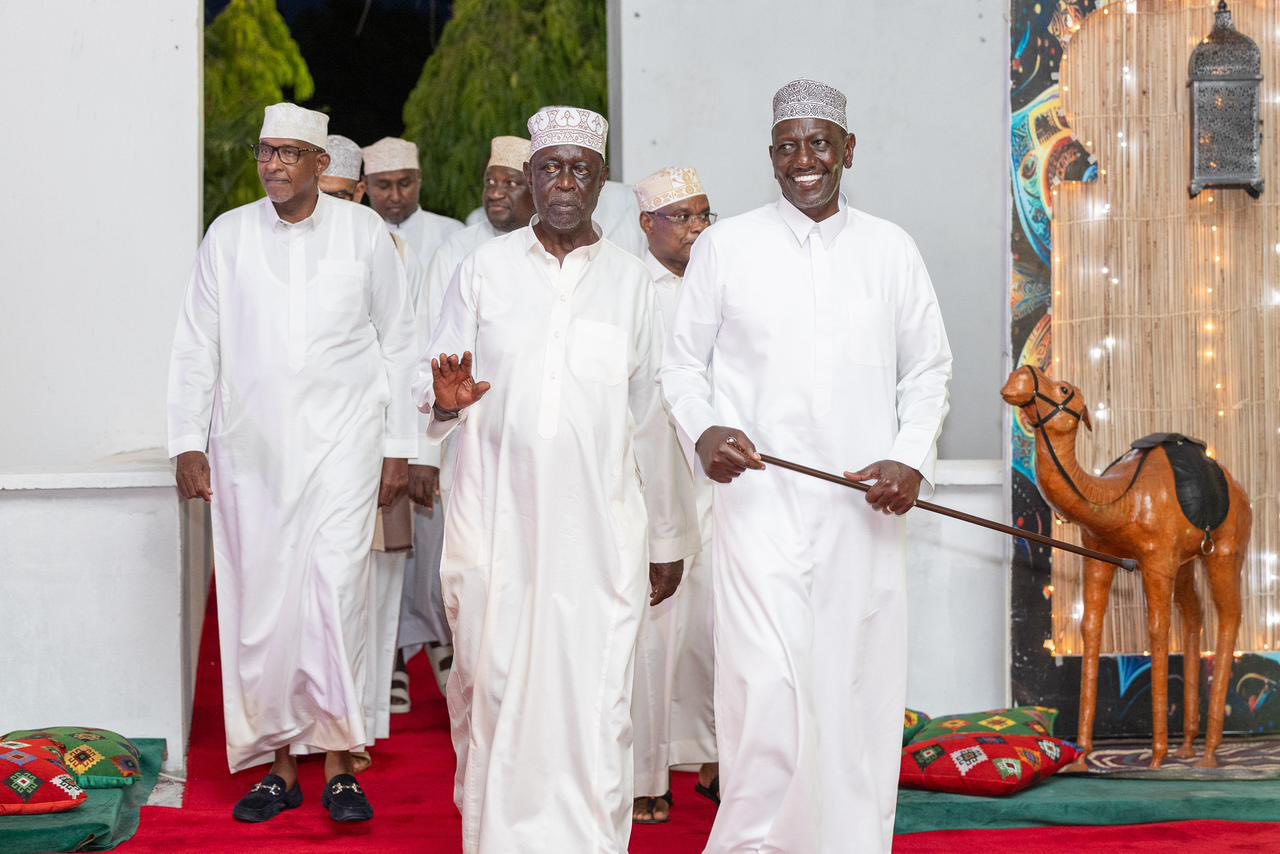
The government’s renewed focus on Northern Kenya development took a political tone over the weekend as President William Ruto and his allies intensified engagements that combined infrastructure inspections, empowerment programmes and voter mobilisation messaging ahead of the 2027 political cycle.
Cabinet Secretary Aden Duale joined the President in Mandera County for what was described as a working weekend, but which also carried strong political undertones, with leaders emphasising inclusion, registration and grassroots mobilisation.
The team inspected the Banissa Water Supply Project, now 85 per cent complete and expected to provide clean water to more than 1,500 households. They also reviewed the 60-unit Banissa Police Housing Project and the Banissa Modern Market, which is 90 per cent complete and set to host over 200 traders upon commissioning in June 2026.
The development tour was accompanied by a women empowerment programme at Mandera Stadium, where women’s groups from across the county received support aimed at boosting small-scale economic activities.
Mr Duale used the platform to highlight ongoing government programmes in the region, citing progress under the Social Health Authority (SHA) and urging residents to register in large numbers to access health services.
He also linked development efforts to civic participation, encouraging residents to take advantage of the Presidential directive removing additional vetting for national identity cards and to participate in voter registration, framing it as key to “strengthening inclusion and advancing the President’s vision.”
In remarks that blended development messaging with political positioning, Mr Duale cautioned against criticism from the opposition, insisting the government’s approach was steadily transforming historically marginalised regions.
The Mandera engagements brought together senior leaders including governors, senators and MPs from Northern Kenya, signalling coordinated mobilisation in a region considered strategically important in electoral politics.
Political analysts say the intensified visits to Northern Kenya reflect early campaign-style mobilisation, with infrastructure projects and empowerment programmes increasingly being used to reinforce political support bases ahead of the next election cycle.
The weekend tour, though framed as development-focused, underscored a broader reality: that the battle for voter loyalty in marginalised regions is already beginning to take shape.


