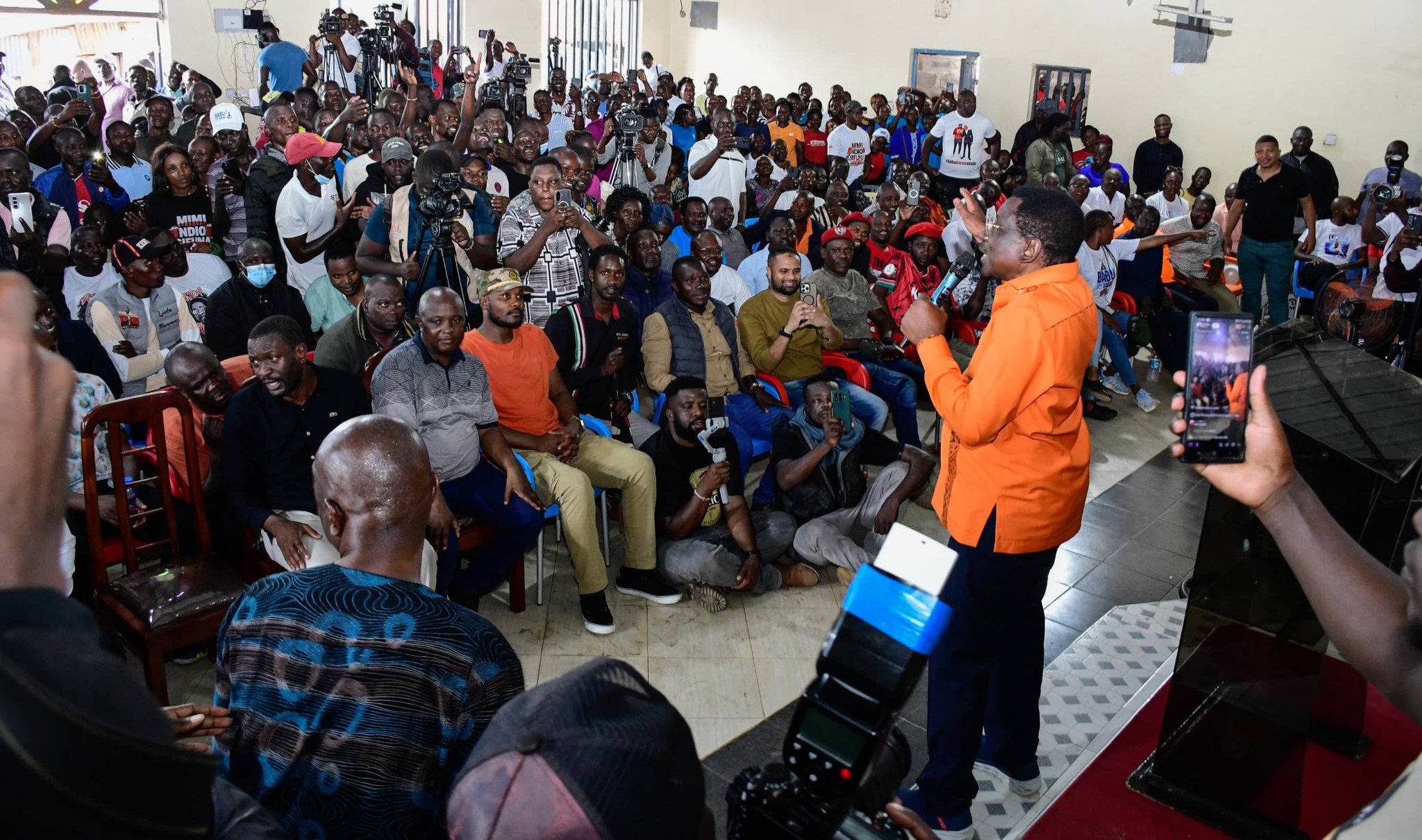
Siaya Governor James Orengo has stepped into the centre of a deepening storm within the Orange Democratic Movement (ODM), after confirming his endorsement as a key party leader at a time when sharp divisions threaten to split the opposition.
In a statement posted on his social media pages, Orengo said he joined worshippers at Triumphat Full Gospel Church following the endorsement, as he prepares for a major mobilisation drive under the Linda Mwananchi Movement.
“I was pleased to worship with the faithful… as we gear up for the significant Linda Mwananchi Movement rally,” he said, referring to the planned gathering at KaOwuor Grounds.
Orengo, the current governor of Siaya County and a long-serving figure in Kenya’s opposition politics, now finds himself at the heart of an intensifying ideological split within ODM, deepened further by the vacuum left after the death of party leader Raila Odinga in October 2025 while receiving treatment in India. Odinga’s passing, followed by a state funeral and burial in Siaya, triggered a succession struggle that has reshaped the party’s internal balance of power.
The post-Raila ODM has now coalesced into two visible camps.
On one side is a group led by Homa Bay Governor Gladys Wanga, alongside allies in what is increasingly seen as a “co-operation wing.” This faction has been pushing for continued engagement with President William Ruto’s administration through bipartisan talks, arguing that political dialogue is necessary to secure development gains and influence national decision-making from within government structures.
On the other side is a more hardline faction aligned with Nairobi Senator Edwin Sifuna and senior figures such as Orengo, who insist ODM must remain firmly in opposition. This camp has been sharply critical of what it terms rising taxation, economic hardship, and shrinking civic space, warning that cooperation with the Kenya Kwanza government risks diluting opposition accountability.
The rift has become increasingly public, with leaders from both camps issuing contradictory statements on ODM’s future direction, exposing fault lines in a party that has long been one of Kenya’s dominant political forces.
The disagreement has also spilled into legal and constitutional debates, with courts previously weighing in on internal party disputes and leadership questions. Judges have repeatedly emphasised that political parties must adhere to their constitutions, respect internal democracy, and resolve leadership conflicts through lawful processes rather than political confrontation. Courts have also cautioned against allowing internal party disputes to escalate into broader constitutional crises.
Analysts say the split between the Wanga-led engagement wing and the Sifuna-Orengo opposition bloc reflects a broader identity crisis in ODM following Raila Odinga’s death, with no single figure yet able to command his level of authority or unify competing interests.
Orengo’s latest mobilisation through the Linda Mwananchi Movement is being interpreted as an attempt to consolidate grassroots influence around the opposition hardline position, particularly in Nyanza and parts of Western Kenya where ODM support remains strong.
The Siaya governor, a veteran of Kenya’s pro-democracy struggles, has long framed his politics around constitutionalism and governance accountability, positioning himself as a defender of institutional checks and balances.
His appearance at church, while routine in Kenya’s political culture, also signals the increasing use of faith platforms as political mobilisation spaces ahead of an expected intensification of campaigns toward the 2027 General Election.


