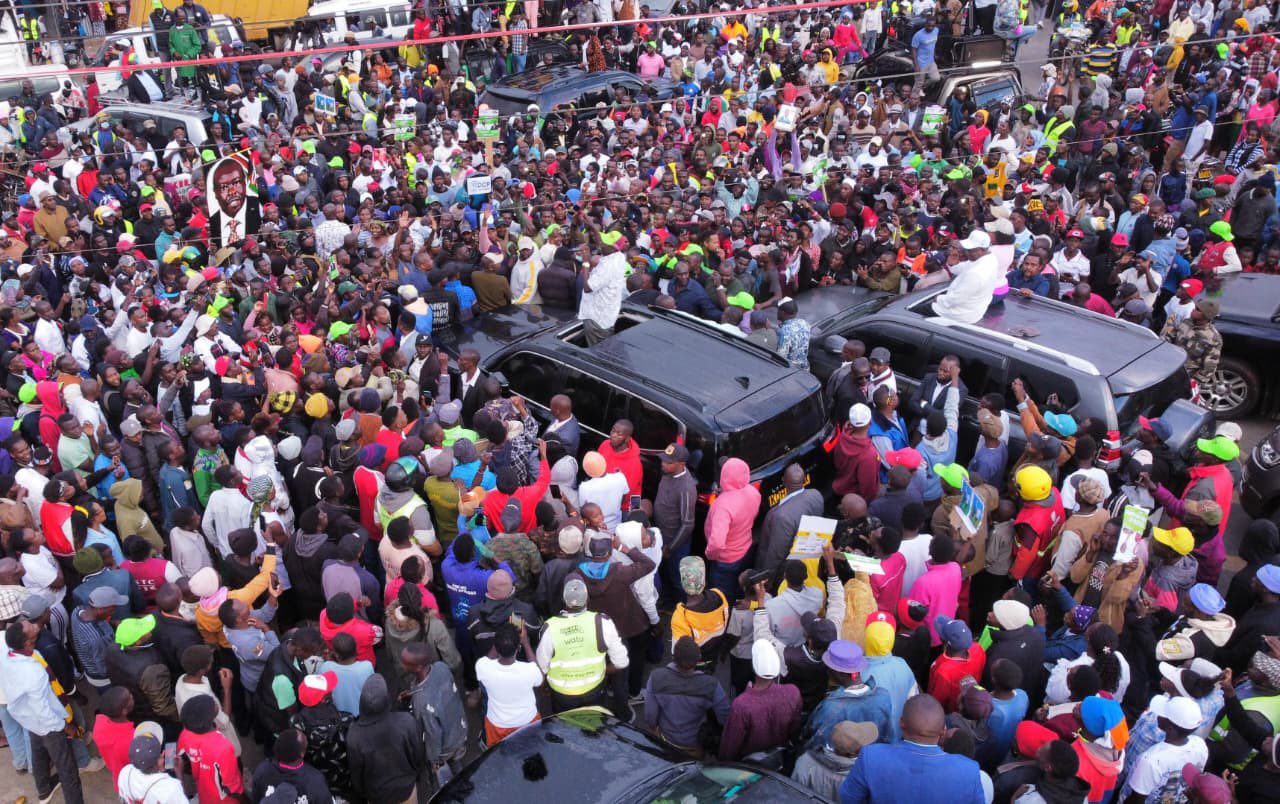
Former Deputy President Rigathi Gachagua has intensified his criticism of President William Ruto’s administration, framing the 2027 General Election as a defining moment for the country’s future and accusing the government of presiding over widespread failure across key sectors.
Speaking after a visit to Kimana in Kajiado County, Gachagua said the country was facing a governance crisis, arguing that millions of Kenyans were grappling with economic hardship, insecurity and declining public services. He claimed that citizens across the country were increasingly disillusioned, citing concerns over healthcare, education, agriculture and personal safety.
“The truth is undeniable—Kenya deserves better governance, better security, quality education, accessible healthcare and the promise of a better future,” Gachagua said, adding that the “soul of the nation” would be at stake in the August 10, 2027 election.
In a strongly worded statement, the Deputy President accused unnamed powerful interests of looting public resources and undermining critical institutions. He also raised alarm over what he described as the “reckless sale” of strategic national assets to foreign entities, a claim that echoes growing political debate over public-private partnerships and foreign investment in key sectors.
Gachagua painted a bleak picture of everyday life for Kenyans, saying salaried workers were burdened by deductions without corresponding services, patients were struggling to access affordable healthcare, and students faced uncertainty over school fees. He further alleged that farmers lacked access to inputs and fair market prices, while investors were increasingly concerned about the safety of their capital.
On security, he accused the state of failing to protect citizens, alleging that cases of police brutality had eroded public confidence in law enforcement.
The Ex Deputy President also took aim at the government’s healthcare reforms, particularly the Social Health Authority (SHA), which has faced criticism from sections of the public over implementation challenges. He described the system as exploitative and failing to deliver meaningful benefits to contributors.
Despite the criticism, Gachagua sought to position himself and his allies as an alternative, promising sweeping reforms if elected. He pledged to restore confidence in public institutions, improve service delivery, and hold corrupt officials accountable under the law.
“Come 2027, Kenyans will have the opportunity to resuscitate this country and reclaim their rights,” he said. “We will restore education, healthcare, social security, media freedom and revive productive agriculture.”
His remarks signal an early escalation of political tensions ahead of the 2027 elections, with divisions within the ruling coalition becoming increasingly visible. Analysts say such statements reflect a shifting political landscape, as leaders begin to realign and appeal directly to voter frustrations.
The comments also come amid heightened scrutiny of the government’s economic policies and reform agenda, which have sparked both support and criticism across different sectors.
As the political temperature rises, Gachagua’s message underscores a broader contest over governance, accountability and the direction Kenya should take in the coming years.


