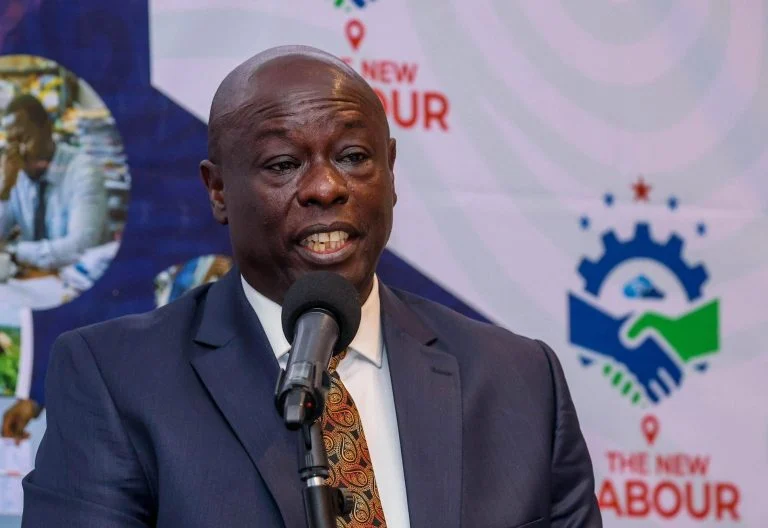
A fresh political fault line is emerging in Kenya’s labour landscape following remarks by former Deputy President Rigathi Gachagua, who has called for the creation of a new workers’ organisation to rival the long-established Central Organisation of Trade Unions. His proposal signals a potentially significant shift in how labour interests are represented in the country, especially at a time when economic pressures are mounting for ordinary citizens.
Speaking during the launch of the Kenya Labour Market and Worker Welfare Report 2026 on May 5, 2026, Gachagua accused existing labour institutions of failing to adequately defend workers against what he described as punitive government policies. His remarks were sharply critical of the current administration led by President William Ruto, particularly in relation to rising statutory deductions and the broader cost of living challenges facing Kenyan workers.
Gachagua anchored his argument in economic data, pointing to what he described as a worrying decline in Kenya’s growth trajectory. According to him, the country’s economic growth has dropped from 7.6 percent in 2021 to 4.6 percent currently, a shift he framed as clear evidence of weakening economic management. By invoking these figures, he sought to reinforce his position that workers are increasingly vulnerable and underrepresented in the current policy environment.
The call for a new labour movement introduces a direct challenge to COTU’s longstanding dominance in representing workers’ interests in Kenya. For decades, COTU has been the central voice of organised labour, negotiating wages, advocating for workers’ rights, and engaging with government on labour policies. However, Gachagua’s critique suggests a growing perception among some political actors that the organisation may no longer be sufficiently responsive to emerging economic realities.
Beyond labour relations, the proposal also reflects broader political dynamics. As leader of the Democracy for Citizens Party, Gachagua appears to be positioning himself as a champion of workers at a time when economic dissatisfaction is becoming a powerful political issue. His remarks could resonate with segments of the workforce who feel the strain of increased taxation and reduced disposable income.
The idea of forming a rival workers’ organisation raises important questions about unity within Kenya’s labour movement. While competition could potentially energise worker representation and introduce new ideas, it also risks fragmenting efforts and weakening collective bargaining power if not carefully managed. The success of such an initiative would depend on its ability to mobilise workers, establish credibility, and effectively advocate for policy changes.
Ultimately, Gachagua’s call underscores a deeper conversation about economic governance, accountability, and the role of labour institutions in times of financial strain. Whether his proposal leads to the formation of a new movement or simply intensifies pressure on existing organisations, it has already ignited debate about the future of worker representation in Kenya.


