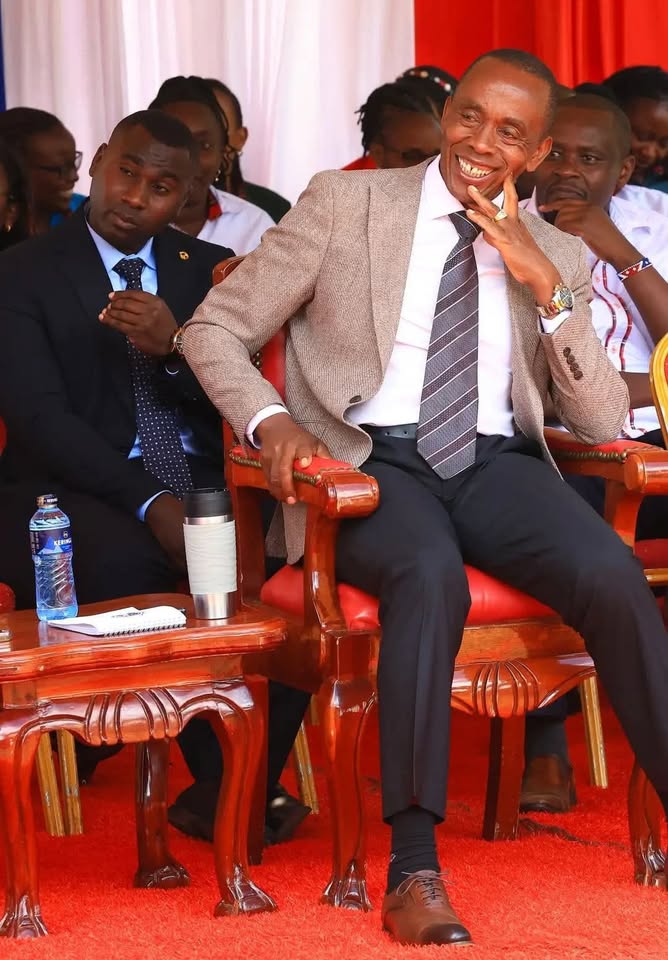
Murang’a governor Irungu Kang’ata has raised concern over what he describes as emerging tensions within the United Democratic Alliance (UDA), warning that recent political developments in the Mt Kenya region risk creating a sense of political alienation among leaders and residents.
Kang’ata pointed to the removal of Kiharu MP Ndindi Nyoro as chair of the National Assembly Budget and Appropriations Committee as one of the key decisions he believes has unsettled the region’s political balance. He argued that the move has been interpreted by some as part of a broader pattern affecting influential figures from the region.
“One of the reasons I feel UDA party strategies need to be improved is when they removed Ndindi Nyoro as the chair of the budget committee in the national assembly,” Kang’ata said.
He also referenced other incidents he said were contributing to growing unease, including what he described as an “attack” on the property of Kiambu Governor Kimani Wamatangi and the impeachment proceedings involving Meru Governor Kawira Mwangaza.
“There are some actions that have been done in my region, which are creating a siege mentality: removal of Ndindi Nyoro, the attack on Governor Wamatangi’s property, the impeachment of the Meru Governor,” he said.
Kang’ata warned that such developments risk deepening mistrust within the ruling party’s strongholds, urging UDA leadership to reassess its internal strategies and manage regional political sensitivities more carefully.
The remarks come amid growing political recalibrations within UDA, which forms the core of President William Samoei Ruto’s political base. The party has in recent months faced internal debate over leadership appointments, parliamentary roles, and regional representation.
The Mt Kenya region has historically been a key political bloc in Kenya’s national politics, often influencing electoral outcomes and government formations. Since the 2022 elections, leaders from the region aligned to UDA have held influential positions in Parliament and government. However, recent reshuffles and political disagreements have exposed underlying tensions, with some leaders calling for greater inclusivity and balance in decision-making processes within the ruling party.


