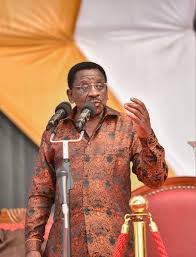
Deputy President Kithure Kindiki is emerging as a central figure in Kenya’s shifting political order, consolidating his authority within President William Ruto’s administration even as tensions with former Deputy President Rigathi Gachagua intensify.
Kindiki, a former law professor and Ruto’s interior minister, was tapped to replace Gachagua after the Senate impeached the latter in October 2024 on grounds including constitutional violations and stirring ethnic divisions. His nomination was swiftly approved by Parliament, but further legal hurdles followed: a high court temporarily blocked his swearing-in, citing major constitutional issues. Judges later lifted the hold, arguing that the deputy presidency could not remain vacant under the constitution. On Nov. 1, 2024, Kindiki was formally sworn in.
A Rift Built on Law and Power
While Kindiki has publicly held onto a congenial posture — declaring that his friendship with Gachagua “remains unchanged” even after the impeachment — behind the scenes, the power dynamics are shifting sharply. Gachagua’s supporters have launched legal challenges, with some petitioners arguing that Kindiki’s ascension is flawed on procedural grounds.
Kindiki’s rise has also translated into party dominance. Shortly after becoming deputy president, he was appointed Deputy Party Leader of the United Democratic Alliance (UDA), a role that had been occupied by Gachagua and is seen as critical to wielding influence in the ruling party.
Shaping a New Leadership Style
Kindiki is positioning himself not just as a loyalist to Ruto, but as a stabilizing, institutional force. His background — a PhD in international law and years in academia — lends him credibility and gravitas. He frames his role as one anchored in the rule of law, contrasting sharply with what some view as Gachagua’s more populist and confrontational style.
Yet, the legal drama continues. Some court petitioners maintain that Gachagua’s impeachment and Kindiki’s assumption of office remain legally contentious. If they succeed, Kenya could face a constitutional crisis over who legitimately holds the deputy presidency.
What’s at Stake
This unfolding drama has large implications for Kenya’s short- and medium-term politics. Kindiki’s growing clout could reshape UDA’s internal balance of power and influence how the party navigates the lead-up to the 2027 elections. For Gachagua, the stakes are equally high: a legal win could not only salvage his political relevance but also reignite his influence in the Mount Kenya region.


