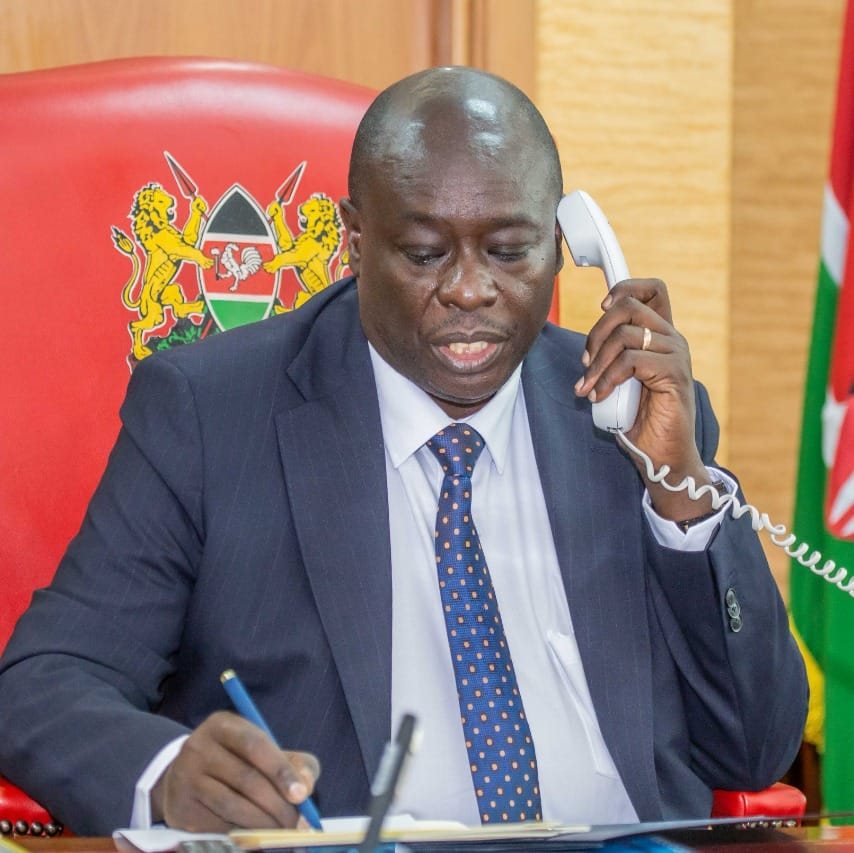
President William Ruto could find himself in an unprecedented constitutional scenario of having two deputies if courts ultimately overturn the impeachment of his deputy, Rigathi Gachagua, lawyers told the Constitutional Court in Nairobi on Thursday.
The court is hearing consolidated petitions challenging both the legality and the process that led to Gachagua’s removal from office, in a political and legal battle that has sharply divided opinion on the limits of parliamentary authority and judicial review.
Gachagua was impeached by Parliament following accusations that included gross misconduct, violations of the oath of office, and political tensions within the executive. His removal marked a dramatic escalation in his increasingly strained relationship with President William Ruto, with the former deputy president frequently emerging as one of the administration’s most vocal internal critics before his ouster.
In the months leading to the impeachment, Gachagua had publicly accused sections of government of sidelining him and undermining his role in the executive.
He said at various points that he was being excluded from key decisions, warning that “there were deliberate efforts to weaken the Office of the Deputy President.”
He also positioned himself as a defender of what he described as regional and political interests that were not being adequately represented in government decisions.
His critics, however, accused him of insubordination and fueling internal divisions within the Kenya Kwanza administration. During Thursday’s hearing, lawyers opposing the impeachment warned that if the High Court later nullifies the process while a successor has already been considered or appointed, Kenya could face a constitutional deadlock in which two individuals lay claim to the office of Deputy President.
They argued that such a ruling would effectively place President Ruto in an awkward and legally uncertain position, with competing claims to the second-highest office in the executive arm of government. One of the lawyers told the court that the outcome could create “two individuals simultaneously asserting authority over the same constitutional office.”
The case has raised complex constitutional questions around whether impeachment proceedings, once concluded in Parliament, can be reversed by the courts, and what happens to the office if judicial and parliamentary outcomes conflict.
At the centre of the dispute is the interpretation of constitutional provisions governing the removal of a deputy president, including whether due process was properly followed and whether the evidentiary threshold required for impeachment was met. Petitioners challenging the process argue that the impeachment was rushed and politically motivated, and that Gachagua was denied adequate procedural protections.
They maintained that the process failed to meet constitutional standards and warned that it set a dangerous precedent for future impeachments. The state, on the other hand, maintains that Parliament acted within its constitutional mandate and that the courts should not interfere with legislative decisions that have already been completed.
Judges are now being asked to consider a rare scenario in Kenyan constitutional law: whether a court can reinstate a deputy president after impeachment has already taken effect, and how to resolve a potential overlap in authority should conflicting rulings emerge from different levels of the judiciary.
The matter has heightened political tensions, with implications not only for the stability of the executive but also for the broader balance of power between Parliament and the Judiciary. give me a headline 7 words or less


