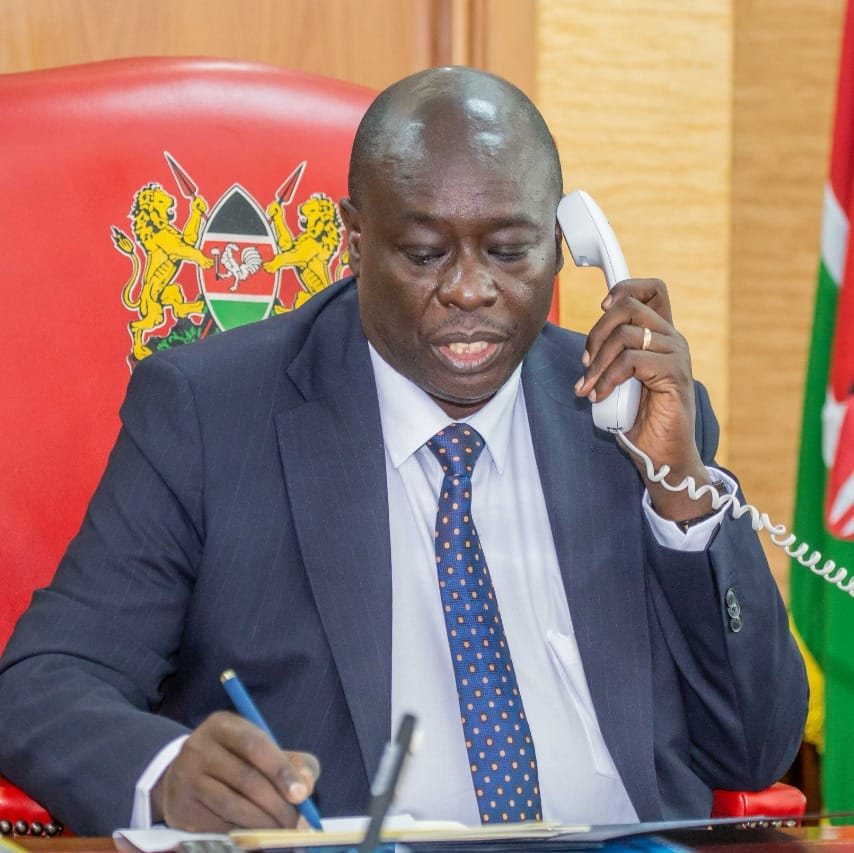
Senator Kaba Methu of Nyandarua has reignited debate over the impeachment of former Deputy President Rigathi Gachagua, offering fresh claims about behind-the-scenes political negotiations while reflecting on one of Kenya’s most consequential constitutional processes.
In a public statement, Methu referenced remarks by Nairobi Senator Edwin Sifuna, suggesting that the removal of Gachagua exposed deeper vulnerabilities within President William Ruto’s administration and reshaped political calculations ahead of future elections.
“My brother Sen. Edwin W. Sifuna opened the impeachment wound yesterday,” Methu said, adding that he had “absolutely nothing with anyone outside Mt. Kenya region who voted H.E. Rigathi Gachagua, EGH out.”
He argued that the impeachment was partly driven by internal Mt. Kenya political tensions, where some leaders viewed Gachagua’s ouster as a consequence of betrayal within his own regional base.
“It was a question of, if this man has been betrayed by his own kinsmen, his own blood why not,” he said.
Methu further cited arguments attributed to political actors who believed that breaking the alliance between Ruto and his then deputy would weaken the presidency.
“Others like Sifuna argued, once we break the duo apart, William Samoei Ruto will be completely vulnerable (which is exactly the case),” he said.
He also alleged that during the peak of the impeachment process, he, Gachagua, and another unnamed Luo female senator held a private meeting with a powerful political leader to seek support against what he termed “vicious aggression” from President Ruto’s camp.
“At the heat of the impeachment, RG, myself and another Luo female senator privately met a very powerful political leader. We were seeking his support, to whip his troupes to help us,” Methu claimed.
According to him, the leader initially pledged support and even contacted a minority leadership senator, but the deal later collapsed.
“When I went to the senate that afternoon, I so naively asked the senator whether the deal still stood, he looked at me with deep sympathy and told me, ‘Methu, unfortunately the gazelle run to a leopard to seek help,’” he said.
Methu further alleged that the political leader later cited historical grievances, claiming his community had been denied the presidency multiple times and would not support the effort.
The remarks have reopened discussion on the high-stakes political manoeuvring that surrounded Gachagua’s impeachment, a process that unfolded in two intense stages in Parliament.
The motion began in the National Assembly, where MPs accused Gachagua of gross misconduct, abuse of office, and conduct seen as undermining government unity. Supporters of the impeachment argued that his behaviour had become incompatible with collective executive responsibility.
“I am being targeted for political reasons, not because I have broken the law,” Gachagua said during his defence, insisting the process was politically motivated.
The motion passed overwhelmingly in the National Assembly before moving to the Senate, where it became a highly charged constitutional trial. Senators heard evidence, legal arguments, and competing political narratives as both sides fought to sway opinion.
Gachagua’s legal team argued that the charges did not meet the constitutional threshold for removal and accused the process of being rushed and politically driven. However, the Senate ultimately upheld the impeachment, leading to his removal from office.
The decision marked the first successful impeachment of a sitting Deputy President in Kenya’s history, exposing deep divisions within the Kenya Kwanza coalition and particularly within the Mt. Kenya political bloc.
Political lobbying reportedly intensified during the process, with both supporters and opponents of the motion seeking to influence undecided legislators. Analysts later noted that the impeachment was not only a legal test but also a political realignment moment ahead of the 2027 elections.
In its aftermath, the fallout reshaped alliances within government and opposition circles, while raising broader questions about loyalty, regional politics, and the balance of power in Kenya’s executive leadership.


