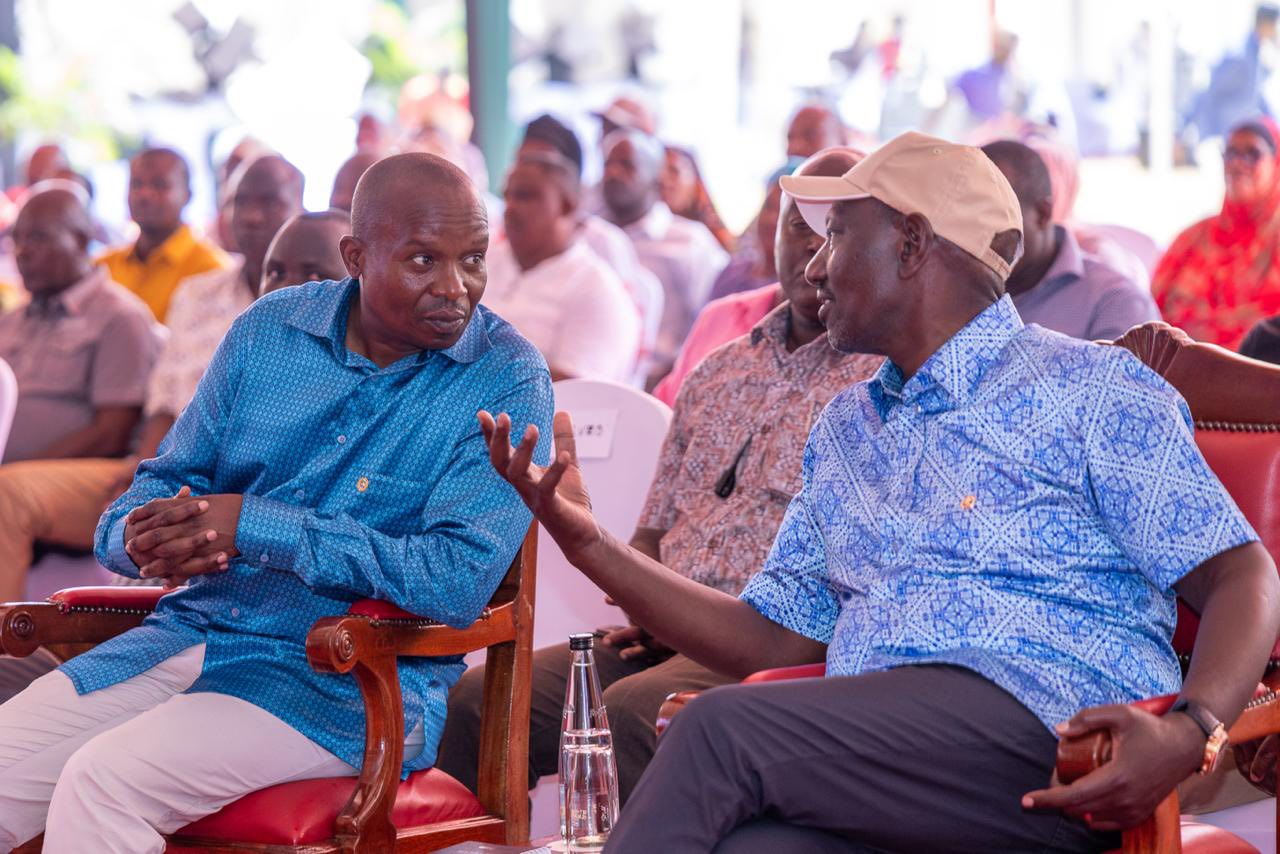
Deputy President Kithure Kindiki was back in the field in Meru on Friday, inspecting roads and electricity connections and promising more projects in what is increasingly looking like the early groundwork for the 2027 re-election campaign for President William Ruto.
In Meru County, Kindiki toured the newly tarmacked Nkubu–Rubiri–Kamurita road, an 11-kilometre stretch built at a cost of Sh630 million, hailing it as part of the government’s effort to open up rural economies and ease movement for farmers and traders.
“The government is pleased with the quality of work and timely completion of the Nkubu–Rubiri–Kamurita road,” he said during the inspection, flanked by contractors, engineers and local leaders.
But on the ground, the message was as political as it was developmental. Every kilometre of tarmac, every electricity pole, and every market upgrade is now being read through the lens of 2027.
Kindiki also inspected the Rubiri Village Last Mile Electricity Project, which is connecting 85 households under a wider Sh2.3 billion programme targeting 26,500 homes in Meru County.
For residents, the promise of electricity means more than just lighting homes. It is also about small businesses staying open longer, milk cooling, and better returns from farming. For the government, it is also about something else — voter confidence.
At Rubiri Market, the Deputy President told residents that more projects were on the way, including new roads, milk coolers for dairy farmers, and funds to upgrade township infrastructure.
He said the Kionyo–Kanyakine–Mitunguu road and the Kieni Kia Ndege–KK Mworoga–Maraa–Kithino–Mitunguu route had been prioritised for tarmacking, while Nkubu and Mitunguu towns would receive Sh240 million for urban roads.
The dairy sector, he added, would also benefit from additional milk coolers — a small but politically sensitive intervention in a region where farmers have long complained about low prices and exploitation by middlemen.
“Additional milk coolers will be supplied to dairy farmers in this area,” Kindiki said.
On paper, these are routine development announcements. Politically, they are more than that.
Mt Kenya remains a key battleground ahead of the 2027 General Election, and the Kenya Kwanza administration knows that delivery — or the perception of it — will shape how the region votes.
The region backed Ruto strongly in 2022, but political realignments, economic strain, and the fallout from the exit of former Deputy President Rigathi Gachagua have created new uncertainties.
That vacuum has turned development visits into political messaging platforms. Every tour now doubles as a reassurance mission — that the government is still delivering, still listening, and still in control of its core support base.
Kindiki’s presence in Meru was not accidental. He was joined by Governor Isaac Mutuma, Senator Kathuri Murungi, Imenti South MP Shadrack Mwiti and Imenti Central MP Moses Kirima — leaders who will also be reading the political mood on the ground as closely as the government projects themselves.
Behind the speeches and site inspections is a simple political reality: the road to 2027 is already under construction, and in places like Meru, it is being paved quite literally with tarmac, electricity poles and promises of economic turnaround.


