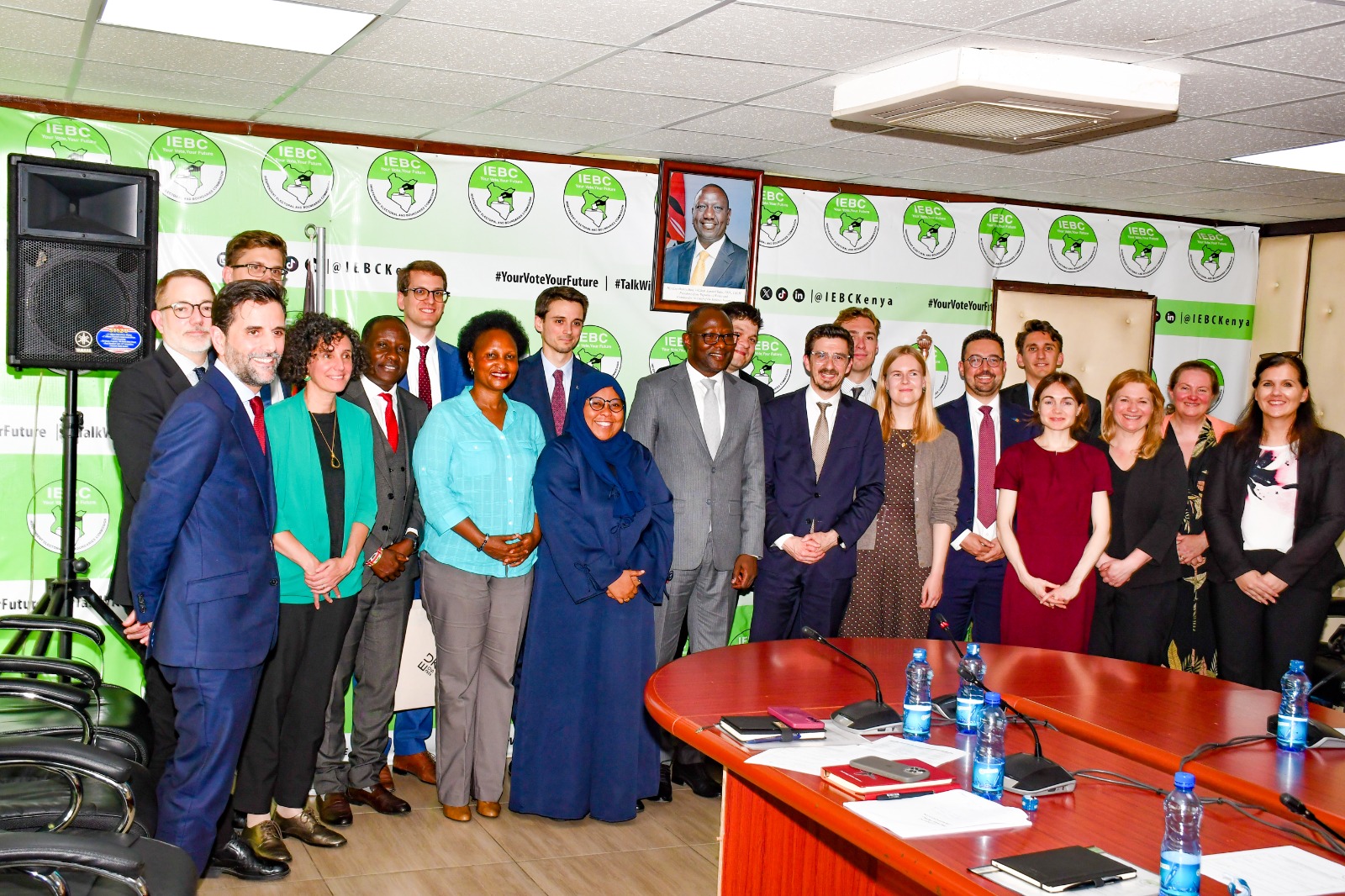
The Independent Electoral and Boundaries Commission (IEBC) has intensified its diplomatic and technical engagement ahead of the 2027 General Election, hosting a delegation from the European Union (EU) and the EU Council Africa Working Party (COAFR) in Nairobi for discussions centred on electoral preparedness, integrity and public trust.
The meeting comes at a critical moment for the electoral agency, which is working to rebuild confidence in Kenya’s voting process while addressing emerging threats such as misinformation, digital manipulation and political polarisation.
The IEBC team, led by chairperson Erastus Ethekon, outlined key milestones achieved since assuming office, including the conduct of more than 30 by-elections that officials say have provided valuable operational lessons in logistics, voter engagement and results management.
The Commission also reported that 2.6 million new voters have been registered, raising the national roll to 24.7 million, with a target of 28.5 million ahead of the 2027 polls.
Ethekon told the delegation that the Commission was prioritising electoral integrity, inclusion and institutional readiness, noting that trust in the electoral system remains a central challenge.
He warned that political polarisation, declining public confidence and the spread of online misinformation could undermine preparations if not addressed early.
“Credible elections require coordinated action, strong voter education and sustained public trust-building,” he said.
The Commission is also finalising an Election Operation Plan (EOP), which will provide a detailed roadmap for activities leading up to the 2027 elections, including voter registration, technology deployment and results transmission.
IEBC vice chairperson Fahima Abdallah Araphat said the Commission was expanding diaspora voting programmes beyond traditional embassy-based registration, with plans to include 17 additional countries in future phases.
She said the move was part of broader efforts to enhance inclusion and ensure Kenyans living abroad are fully represented in the electoral process.
Commissioner Dr Ann Nderitu highlighted ongoing reforms aimed at improving gender inclusion, disability accessibility and participation of special interest groups, saying the Commission was committed to making elections more equitable.
The EU delegation, led by Alexandre Polack, chair of COAFR, reaffirmed the bloc’s support for Kenya’s democratic processes, describing the country as a key partner in the region.
Polack emphasised the importance of credible, transparent and peaceful elections, and expressed interest in deepening understanding of Kenya’s electoral environment ahead of 2027.
The EU also signalled continued support for civic space, media freedom and the participation of youth, women and marginalised groups in the democratic process.
The meeting concluded with both sides pledging closer cooperation in the run-up to the elections, with a shared focus on strengthening electoral systems and ensuring credibility.
The engagement comes as the IEBC steps up preparations for what is expected to be a highly competitive and closely watched election, with officials warning that the integrity of the process will depend on sustained institutional reforms and public trust.


