Former Deputy President Rigathi Gachagua has received three more lawmakers who have defected from President William Ruto's United Democratic Alliance (UDA) to his Democracy for the Citizens Party (DCP), in a fresh boost to his political mobilisation ahead of the 2027 General Election.
The latest arrivals are Gatundu South MP GG Kagombe, Laikipia West MP Wachira Karani and Nyeri Woman Representative Rahab Mukami, who joined the party during a meeting at Gachagua's Wamunyoro residence on Tuesday.
The defections raise DCP's parliamentary membership from 19 to 25, according to Gachagua, as he intensifies efforts to build the party into a formidable political vehicle ahead of the August 2027 elections.
The former Deputy President described DCP as the party of the moment and the future, signalling his determination to attract more elected leaders from the ruling coalition.
The new members join a growing list of politicians who have crossed over to DCP as the former Deputy President seeks to consolidate his support base, particularly in the Mount Kenya region.
The recruitment drive comes as Gachagua seeks to establish a stronger presence in Nairobi, where he has declared an ambitious plan to capture elective seats currently held by rival political formations.
On Monday, while opening the party's Nairobi County offices in Kasarani, Gachagua ruled out political zoning arrangements with other opposition parties, insisting that DCP would field candidates across the capital.
"I have not and will not agree with anybody about zoning in Nairobi. DCP will have a candidate for Governor, Senator, Woman Rep, 17 MP slots and 85 MCAs," he said.
He added: "The governor who will fix Nairobi will come from DCP."
The declaration puts Gachagua on a potential collision course with other opposition parties seeking to negotiate how to share elective positions ahead of the next elections.
No automatic tickets for defectors
Despite welcoming politicians from UDA, Gachagua has sought to assure existing party members and other aspirants that joining DCP will not guarantee anyone an automatic nomination.
He has promised competitive nominations in March 2027, warning party officials against favouring individuals seeking elective positions.
"There are no special individuals or favoured aspirants. I encourage all aspirants across the country to put their best foot forward and strengthen their grassroots networks ahead of the nominations in March," he said.
The party also plans to introduce smart membership cards to strengthen its register and help determine who participates in the nomination process.
Gachagua has maintained that even his relatives seeking elective positions will have to compete for party tickets.
Threatens action over identity cards
The former Deputy President has also escalated his criticism of the government over alleged delays in issuing national identity cards to young people in areas perceived to support the Opposition.
He claimed that applicants in regions considered supportive of President Ruto were receiving their identification documents within two to three days, while those in opposition strongholds were waiting for up to seven months.
"We will be coming to your office. We will storm your office to ask you why you're having selective issuance of IDs," he said.
He argued that delays could prevent eligible young Kenyans from registering as voters ahead of the 2027 elections.
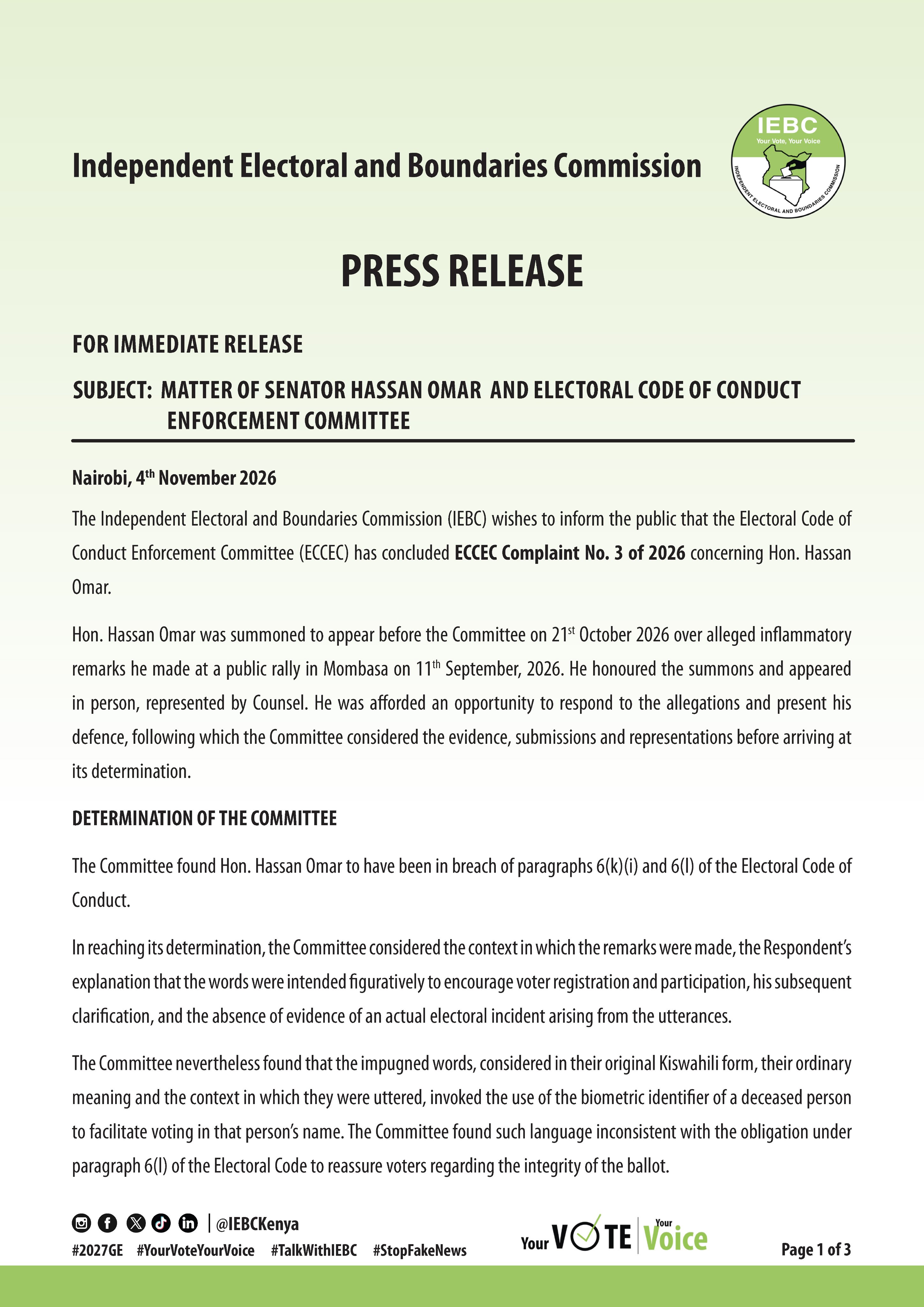
Gachagua also challenged the Independent Electoral and Boundaries Commission (IEBC) to convene consultations with political parties over the technology to be used in the next General Election.
"I'm calling upon IEBC to call us for a meeting. All the stakeholders, we agree. Because we cannot allow a vacuum," he said.
The latest developments underline Gachagua's twin political strategy of expanding DCP's national membership while positioning himself as a central figure in the opposition's efforts to challenge Ruto in 2027.
However, his decision to rule out zoning in Nairobi could complicate negotiations among opposition parties, particularly if they seek to avoid splitting votes in constituencies where they hope to defeat candidates allied to the President.