President William Ruto's renewed campaign in Western Kenya is increasingly turning into a battle against Nairobi Senator Edwin Sifuna, whose rising popularity in opinion polls has made him one of the strongest challengers to the President ahead of the 2027 General Election.
The President's tour of Busia and Bungoma comes against the backdrop of a political shift in the region, where Sifuna has emerged as a formidable opposition figure, threatening to disrupt Ruto's efforts to consolidate support previously associated with the late ODM leader Raila Odinga.
A recent TIFA Research poll placed Sifuna and Ruto in a statistical tie nationally, with each commanding 31 per cent support in the 2027 presidential race. More significantly for the President's Western tour, the survey showed Sifuna enjoying 55 per cent support in the region against Ruto's 25 per cent.
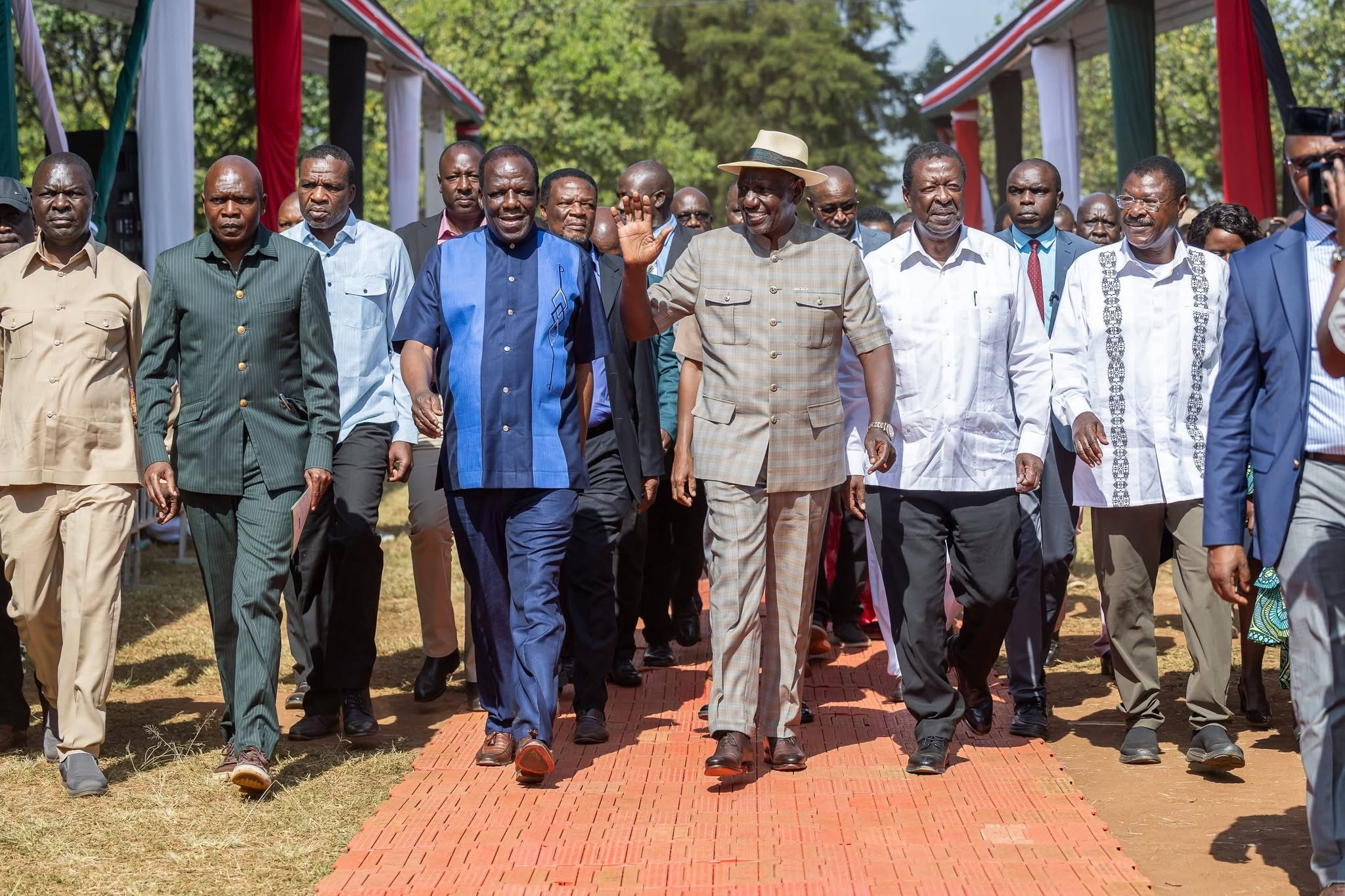
The findings have given fresh significance to Ruto's extended presence in Western, where he has been commissioning projects, making development pledges and attacking opposition leaders over what he describes as their lack of unity and a national agenda.
In his latest engagements, the President challenged his opponents to settle on a presidential candidate, accusing them of being driven by personal ambitions rather than the interests of ordinary Kenyans.
“They have spent more than a year haggling over who among them will be their presidential candidate. Their selfish interest cannot even allow them to settle on a single person among themselves. Will they think about the agenda of ordinary Kenyans?” he posed.
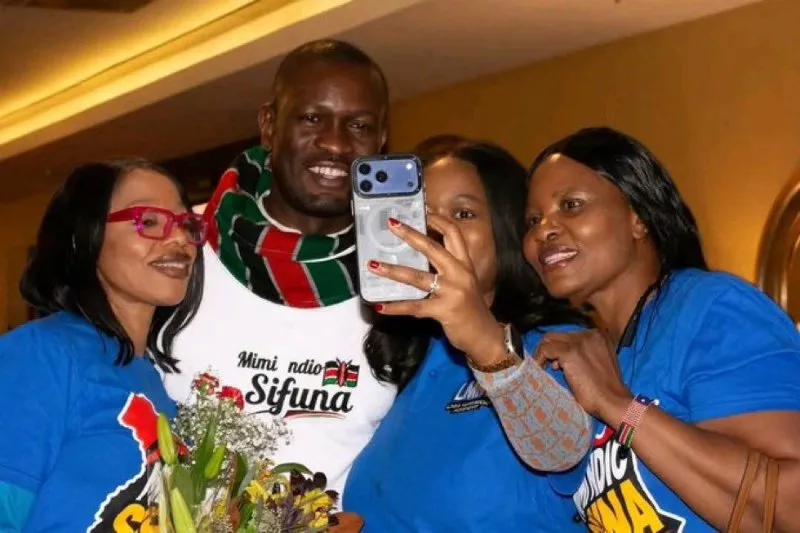
But the President's political challenge in the region is no longer limited to traditional opposition leaders. Sifuna, who leads the Linda Mwananchi movement, has become an increasingly prominent figure in the contest, with his appeal extending beyond his Nairobi political base.
The senator's rise has also received a significant boost from former Deputy President Rigathi Gachagua, who on Saturday openly backed his presidential ambitions and urged Nairobi residents to rally behind him.
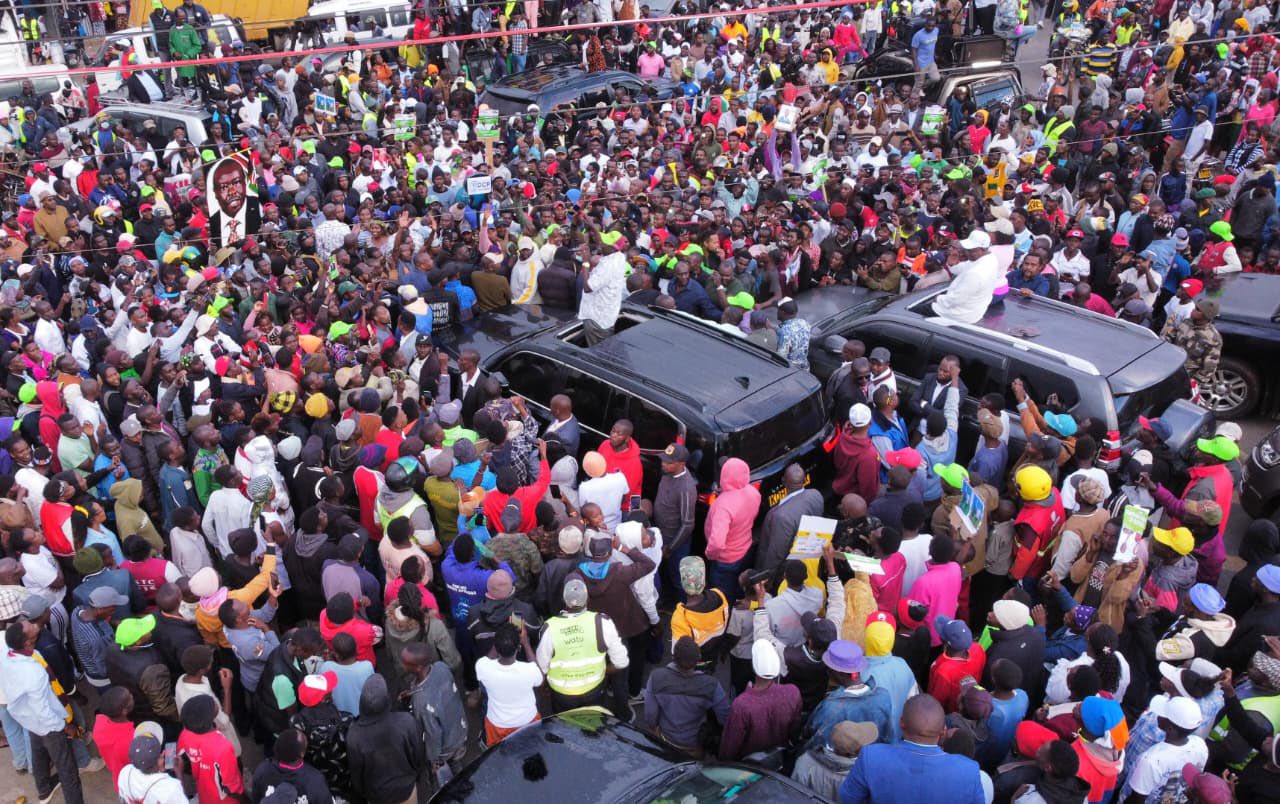
Speaking at a rally in Kangemi, Gachagua said opposition leaders had agreed to field one candidate against Ruto in 2027, promising that internal differences would not prevent them from uniting behind a common flagbearer.
“People of Westlands, I want to assure you that we, as opposition leaders, have talked and agreed that come what may, left or right, forward or backward, sun or cold, we will field one candidate to send [Ruto] home,” he said.
Gachagua also turned his attention to the Luhya community, accusing Prime Cabinet Secretary Musalia Mudavadi and National Assembly Speaker Moses Wetang'ula of persuading the region to settle for parliamentary leadership positions instead of demanding a bigger share of national power.
“You Musalia, you Wetang’ula, stop misusing the Luhya. These people want power, they want government, they do not want parliamentary committee chairmanships. Isn’t that so?” he said.
The former Deputy President questioned whether the community was satisfied with committee chairmanships and other parliamentary positions, arguing that it should instead seek a meaningful stake in the next government.
His remarks were politically significant because Mudavadi and Wetang'ula are among Ruto's most influential allies in Western, providing the President with an established political network in a region where Sifuna is gaining ground.
Gachagua's deputy party leader Cleophas Malala, who accompanied him, went further by openly linking the senator to the opposition leader's political project.
“When I say Sifuna, you say Gachagua, and when I say Gachagua, you say Sifuna,” Malala told the crowd, describing the two as part of the political alliance seeking to defeat Ruto.
The endorsement adds a new dimension to the opposition's calculations. While Sifuna has emerged as a leading contender in the polls, the question of who will eventually carry the opposition's presidential ticket remains unsettled, with Wiper leader Kalonzo Musyoka and former Interior Cabinet Secretary Fred Matiang'i also in the contest.
The TIFA survey put Kalonzo at nine per cent, Matiang'i at five per cent and Gachagua at four per cent nationally, leaving Sifuna as the strongest-performing opposition figure in the poll. It was conducted between October 26 and November 5 among 2,036 respondents across the 47 counties.
Another survey published by Stats Kenya on November 27 placed Ruto ahead nationally at 27.4 per cent, followed by Sifuna at 19.6 per cent. However, it also found Sifuna leading in Busia and Kakamega, reinforcing the significance of Western in his political rise. The two surveys used different methodologies and should not be treated as identical measurements.
Ruto is meanwhile relying on his development record and his partnership with Mudavadi and Wetang'ula to counter the opposition's growing appeal.
During the Western tour, he defended the Affordable Housing Programme and the Social Health Authority, challenging opponents who have threatened to reverse his policies to explain what would happen to the jobs and services created under the programmes.
He cited the employment of 1.1 million people under the housing programme and claimed that the health scheme was helping families avoid selling property to meet medical expenses.
The President also announced road construction, electricity connectivity and market projects in the region, seeking to demonstrate that his administration was delivering on its development promises.
In Busia, he launched the construction of the 55-kilometre Butula-Amukura road, valued at Sh3.3 billion, and commissioned Bumala Modern Market. In Bungoma, he announced funding for road projects and other infrastructure developments.
The political stakes are particularly high for Ruto because Western has traditionally been an important electoral base for Raila, whose political partnership with the President following the formation of the broad-based government reshaped the region's political calculations.
With Raila gone, the President has been counting on the influence of Mudavadi and Wetang'ula to maintain that support. Sifuna's growing popularity, however, presents a different challenge: an opposition figure with roots in the region and an emerging national profile.
The emerging contest is therefore not simply about Ruto's development record. It is also about whether the President's Western allies can retain their influence or whether Sifuna, backed by a wider opposition coalition that includes Gachagua, can turn the region into a stronghold of resistance ahead of the 2027 election.