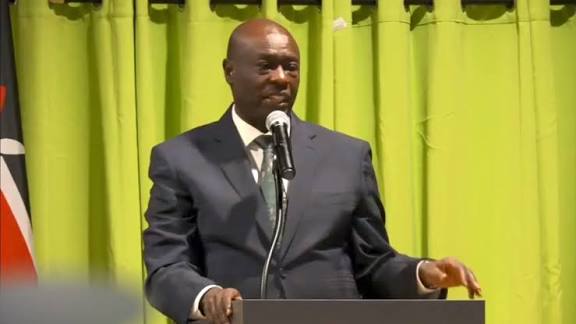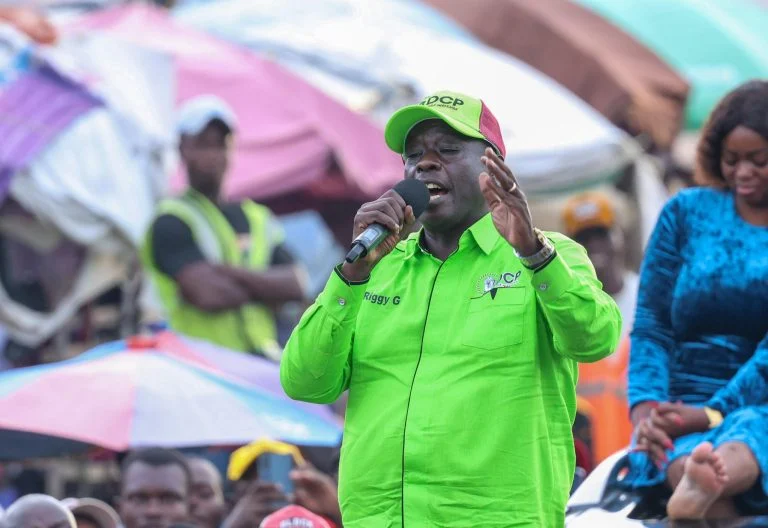
Former Deputy President Rigathi Gachagua has intensified his opposition to the Finance Bill 2026, urging Members of Parliament to reject the proposed legislation during a crucial vote in the National Assembly.
In a statement shared on his official X account on Thursday, June 18, 2026, the Democracy for Citizens Party (DCP) leader described the parliamentary vote as a defining moment for both legislators and the country.
“Today’s vote at the National Assembly for or against the 2026 Finance Bill is a defining moment for the people of the Republic of Kenya,” Gachagua stated.
“At the end of the day, the people of Kenya will know whether their elected representative supports measures that oppress them more or cares for them.”
Gachagua urged MPs aligned with his political movement to remain in the chamber and participate in the vote, arguing that lawmakers should clearly state their positions on the proposed tax measures.
He criticized legislators who choose to abstain or stay away from the vote, saying they would be failing in their duty to represent the interests of Kenyans.
“Those members who keep away from the vote and sit on the fence must be deemed to be against the people of Kenya,” he said.
“They must make up their mind to be with the people or against them. There is no neutral position when the welfare of the people of Kenya is at stake.”
The Finance Bill 2026 has sparked heated political debate, with supporters arguing that it seeks to strengthen tax administration and improve government revenue collection, while opponents claim it could increase the financial burden on households and businesses.
The debate has also revived memories of the 2024 anti-tax protests that forced the government to withdraw the Finance Bill 2024 following nationwide demonstrations led largely by Gen Z activists.
Several opposition leaders have linked the current bill to the broader debate on taxation and the cost of living, with some planning activities to mark the anniversary of the 2024 protests on June 25.
Among the most contested provisions in the bill are proposals affecting second-hand clothing imports, rental income taxation, mobile phone imports, and expanded powers for the Kenya Revenue Authority (KRA).
During debate in the National Assembly, Kathiani MP Robert Mbui strongly opposed the legislation, accusing the government of introducing measures that would place additional pressure on ordinary Kenyans.
“I rise to oppose this draconian, punitive, knee-on-the-neck-of-Kenyans Finance Bill 2026,” Mbui said.
The legislator also criticized proposals that would allow KRA to rely on third-party information when assessing tax liabilities, arguing that the move could expose businesses to unfair treatment.
Kiharu MP Ndindi Nyoro similarly questioned why proposals previously announced by President William Ruto, including tax relief for workers earning below Ksh30,000, were not reflected in the bill.
“We have seen the Head of State talking about the exemption of PAYE for Kenyans earning below Ksh30,000; that has not been captured here,” Nyoro said during debate.
Another contentious issue involves changes to the taxation of second-hand clothes, commonly known as mitumba. Critics argue that altering their VAT treatment could lead to higher prices for consumers and traders.
Bumula MP Wanami Wamboka warned that some of the proposed measures could increase the cost of living without being immediately noticeable to consumers.
“My single biggest problem with this Bill is that it hides price increases inside technical tax language,” Wamboka said.
As lawmakers prepare for the decisive vote, the Finance Bill 2026 continues to emerge as one of the most politically charged pieces of legislation before Parliament, with both government and opposition figures framing the outcome as a major test of economic policy and political accountability.