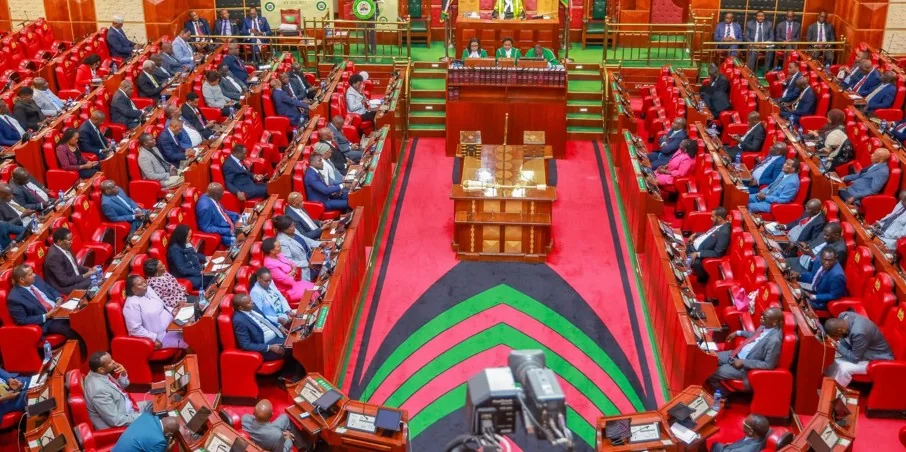
The National Assembly has passed the Finance Bill 2026 after lawmakers approved it during the Third Reading vote held on Thursday, June 18, 2026.
The Bill secured 122 votes in favour against 40 opposed, with no abstentions recorded, giving the government a decisive victory on one of its most important legislative proposals for the upcoming financial year.
Speaker of the National Assembly Moses Wetang’ula announced the results after lawmakers cast their votes, confirming that the legislation had met the threshold required for passage.
According to the official tally, 103 Members of Parliament voted electronically in support of the Bill, while an additional 19 votes were cast manually, bringing the total number of affirmative votes to 122. On the opposing side, 36 MPs voted electronically against the Bill and four cast manual votes, resulting in a total of 40 votes against the legislation.
“The results of the vote are as follows: on the Third Reading of the Finance Bill, the Ayes, electronic vote 103, manual vote 19, total 122. The Nays, electronic vote 36, manual vote 4, total 40. Abstentions nil, so the Ayes have it,” Wetang’ula declared.
The approval of the Bill paves the way for the implementation of the government's proposed tax and revenue measures for the 2026/27 financial year. The legislation forms a key component of the government's fiscal strategy aimed at boosting revenue collection and financing public expenditure.
The vote came after days of intense debate both inside and outside Parliament, with government leaders defending the proposals while opposition figures mounted a spirited campaign against the Bill.
Government allies maintained that the legislation contains reforms designed to improve tax administration and support economic growth without imposing excessive burdens on ordinary citizens.
National Assembly Majority Leader Kimani Ichung’wah repeatedly dismissed claims that the Bill introduces punitive taxes, insisting that the proposed measures are necessary for the country's fiscal sustainability.
Finance and National Planning Committee Chairperson Kuria Kimani also defended the legislation, noting that Parliament incorporated views collected during public participation exercises conducted across the country. According to the committee, more than 100,000 submissions were received from Kenyans during consultations held in 13 counties.
However, opposition leaders argued that some provisions could increase the cost of living and place additional pressure on households and businesses already grappling with economic challenges.
Former Deputy President Rigathi Gachagua was among those who strongly opposed the Bill, urging lawmakers allied to his Democracy for Citizens Party (DCP) to reject the legislation and remain in the House during voting to ensure a formal division vote was conducted.
The passage of the Finance Bill 2026 now marks the end of one of the most closely watched legislative battles of the year and signals the beginning of the next phase in implementing the government's economic agenda for the upcoming fiscal year.