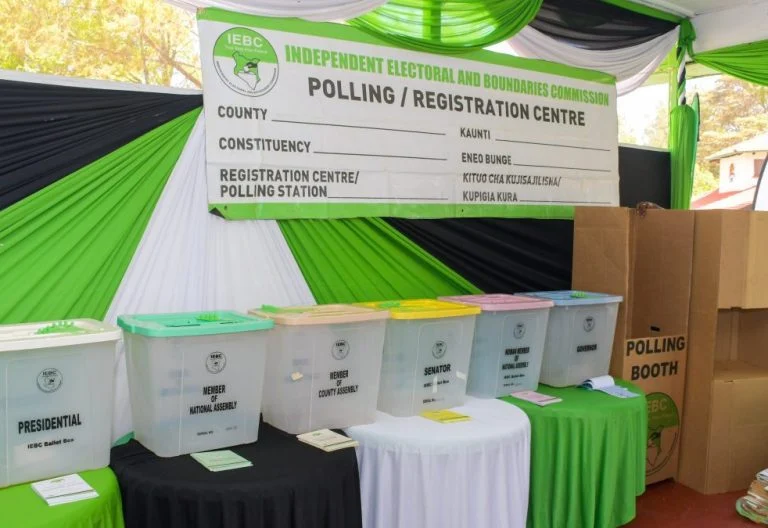
As Kenya prepares for the 2027 General Election, attention is increasingly turning to voter participation, with voter apathy posing a significant challenge to both the political and financial efficiency of the electoral process.
The concern extends beyond the number of Kenyans registered to vote. A large gap between registered voters and those who actually cast their ballots could mean that the next government is legally elected under the existing system but receives active support from a considerably smaller portion of the registered electorate.
Kenya’s 2022 election demonstrated the scale of the challenge. The country had 22,120,458 registered voters, but only 14,213,137 participated, leaving nearly eight million registered voters outside the electoral process.
Low Turnout Drives Up Cost Per Vote
The Cost of Electoral Mistrust in Kenya report identifies voter turnout as an important factor in determining the effective cost of elections.
According to the report, many election expenses are incurred before voters arrive at polling stations, meaning reduced participation does not necessarily result in equivalent savings for the state.
“Low turnout increases unit costs per actual voter,” the report notes.
This creates a financial challenge for the 2027 election because the electoral system must prepare materials, personnel and logistics for the entire registered electorate even when a substantial number of voters may not ultimately participate.
The Political Impact of Voter Apathy
Turnout also carries significant political implications for parties and presidential candidates.
Kenya’s electoral system does not require a presidential candidate to secure the support of more than half of all registered voters. Consequently, a candidate can win the presidency while receiving votes from a significantly smaller proportion of the total registered electorate if turnout is low.
Low participation does not automatically affect the legal validity of an election or the authority of the eventual winner. However, it can influence the political environment surrounding a new administration by highlighting the difference between the size of the registered electorate and the number of citizens who actively participated in choosing their leaders.
The 2022 figures demonstrate that gap clearly, with more than 22 million people registered but only about 14 million turning out.
The Financial Cost of Staying Away
The financial implications of low turnout were also evident in the 2022 election.
Actual expenditure on the election stood at approximately Ksh36 billion. Based on the registered electorate, this represented a cost of about Ksh1,649 per registered voter. When calculated against those who actually voted, however, the figure rose to approximately Ksh2,566 per voter.
The report estimates that the cost per actual voter was about 56 per cent higher than the cost per registered voter in both the 2017 and 2022 elections.
For 2022, the estimated wastage associated with voters who did not participate stood at approximately Ksh917 per ballot, compared with Ksh1,174 in 2017.
2027 Campaigns Face a Turnout Challenge
The figures underline a less visible consequence of voter apathy: the state continues to incur much of the cost of preparing for an election regardless of how many voters eventually turn up.
For political parties, the challenge is therefore twofold. They must persuade voters to support their candidates while also encouraging registered voters who may be disengaged from politics to participate in the electoral process.
Voter mobilisation, civic engagement and voter education could consequently become as important to the 2027 contest as campaign promises and political messaging.
With millions of registered voters having stayed away from the polls in previous elections, increasing participation could determine not only the political reach of the next government but also how efficiently public resources are used to conduct the election.