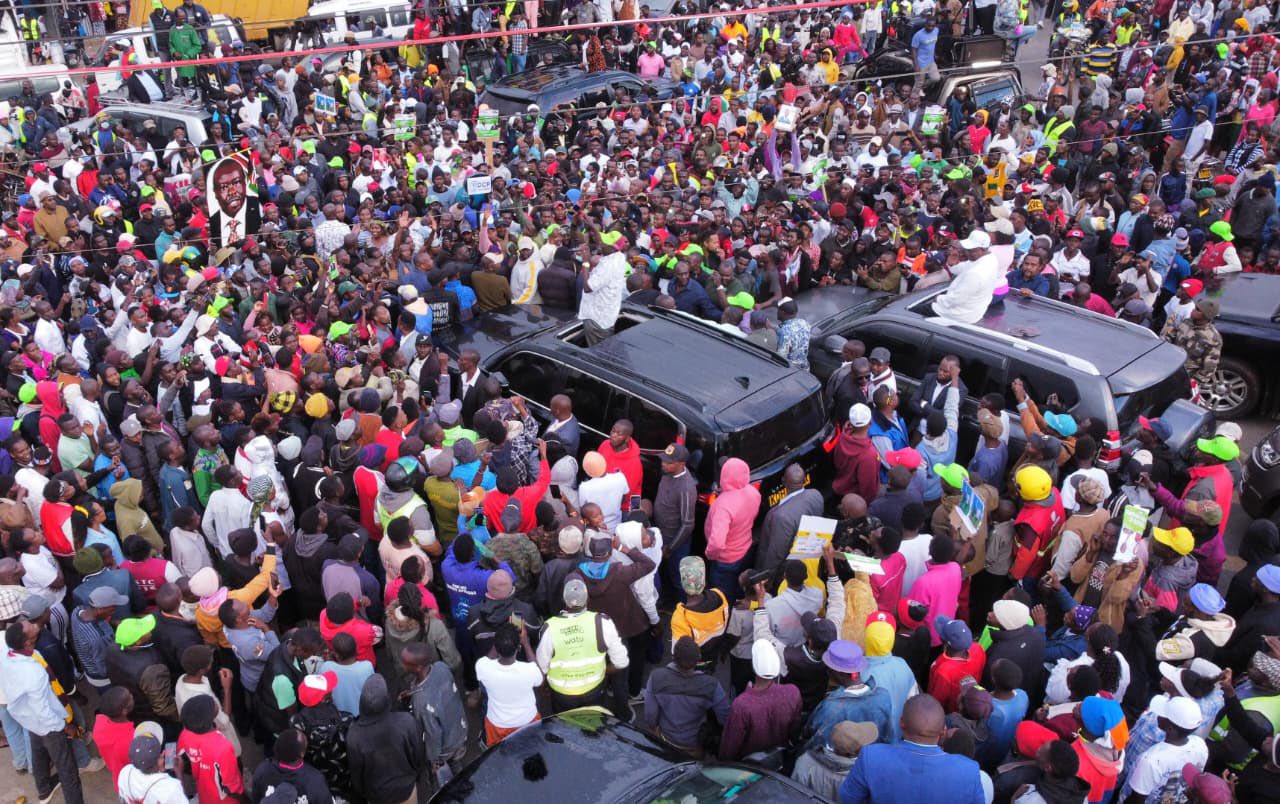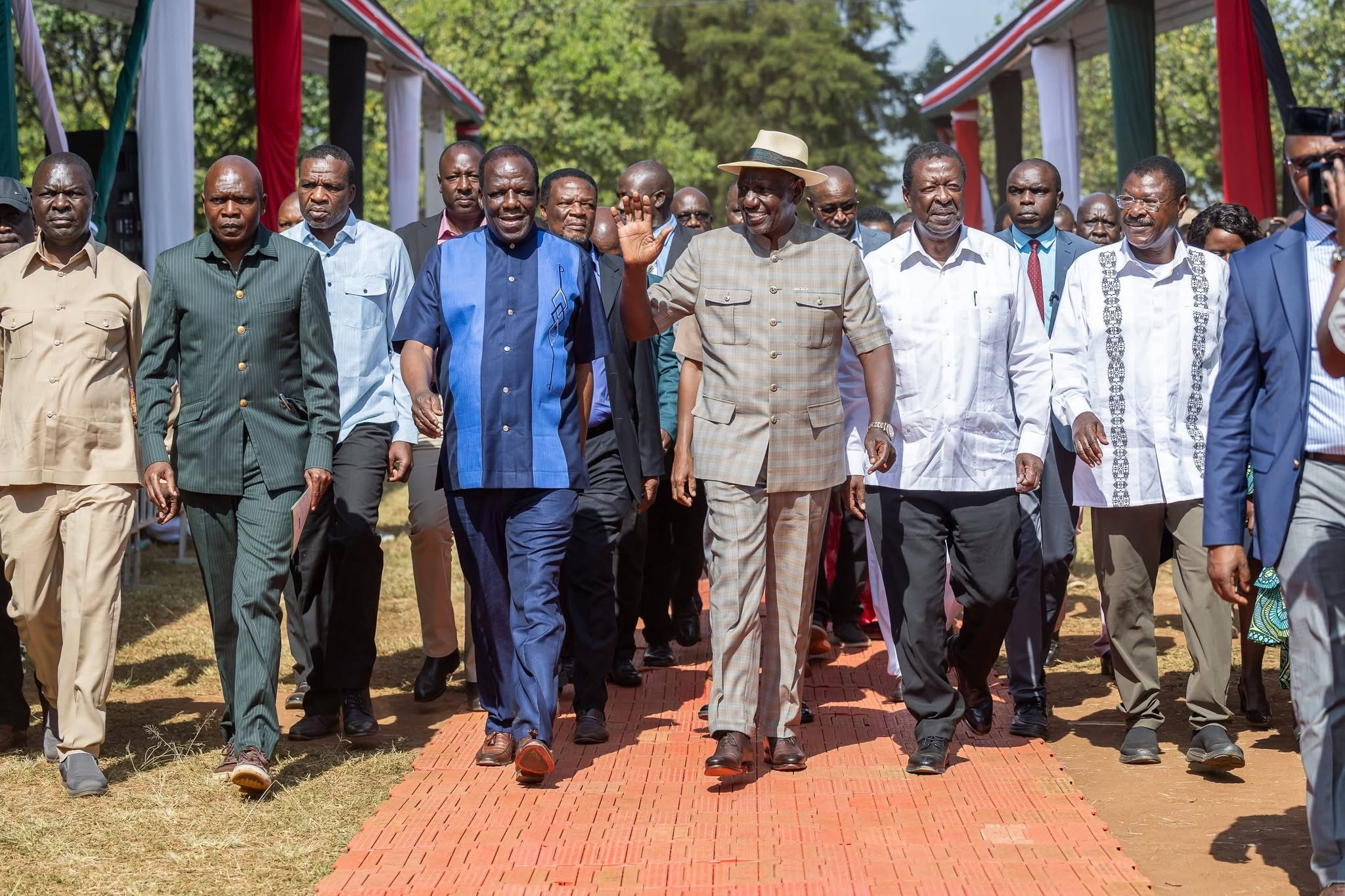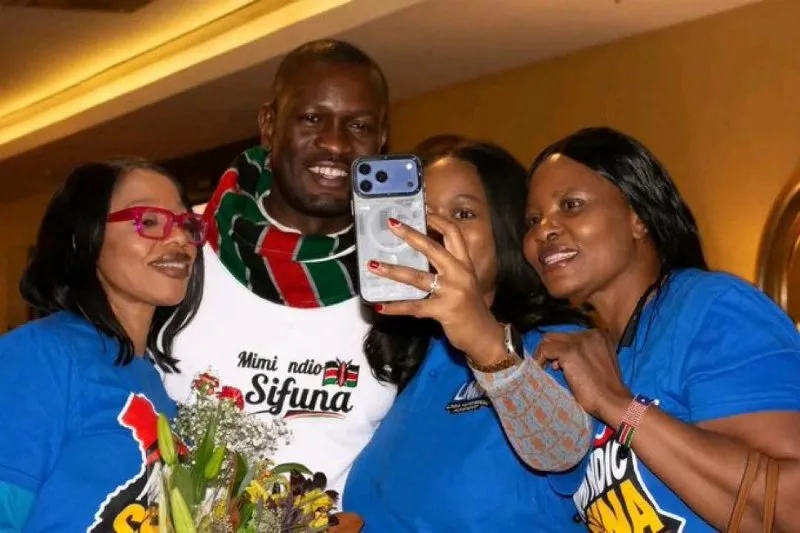
Nairobi Senator Edwin Sifuna has projected that a united opposition could secure as much as 80 per cent of the vote in the 2027 General Election, arguing that President William Ruto would struggle to retain power if opposition leaders overcome their differences.
Sifuna, who is on a diaspora tour of the United States, said the combined support bases of Linda Mwananchi, Rigathi Gachagua's Democracy for the Citizens Party (DCP), Wiper and allies of former Interior Cabinet Secretary Fred Matiang'i could give the opposition a decisive electoral advantage.
“Ukiweka hesabu ya Linda Mwananchi pamoja na ya DCP, uweke na ya Wiper na ya kina Matiang’i, kama hatutafikisha 80%, Kasongo atatuambia mahali ametoa kura,” Sifuna said while addressing Kenyans in the US on Thursday.
The senator, who has been positioning himself as a potential presidential contender, said opposition leaders must prioritise alliances and political cooperation if they hope to defeat Ruto, whom he acknowledged has significant political, financial and institutional advantages as an incumbent.
“You have to give him his flowers. He is a very astute politician; he’s an incumbent, he has a lot of money, he has instruments of state. You must do whatever it is that is required for us to have a good chance of beating him,” he said during an engagement in Maryland.
Sifuna's remarks point to the delicate balancing act facing opposition leaders as they seek to consolidate their support bases while negotiating the possibility of a joint presidential candidate ahead of the August 2027 election.
The opposition landscape includes Gachagua's DCP, Wiper led by Kalonzo Musyoka, former Interior Cabinet Secretary Fred Matiang'i's political camp, former President Uhuru Kenyatta's Jubilee faction, Eugene Wamalwa's Democratic Action Party-Kenya (DAP-K), Martha Karua's People's Liberation Party and leaders associated with the Linda Mwananchi movement.
Siaya Governor James Orengo and former Chief Justice David Maraga have also been involved in opposition engagements, with leaders increasingly calling for a coordinated political front against Ruto.
Orengo has urged opposition figures to put aside individual ambitions, expressing confidence that a combination of leaders from different political formations could deliver a common political objective.
“I am confident that Gachagua, if you're on the front line, and Kalonzo is there, Sifuna is there, Maraga is there, and even me, James Orengo, we will fulfil our mission,” Orengo said during the burial of Gachagua's sister, Eunice Nyangari, in Kieni, Nyeri County, on November 14.
The governor warned against divisions within the opposition, arguing that leaders had an opportunity to work together but needed to build trust and avoid allowing personal ambitions to derail their efforts.
“Tutafaulu tupeleke Kasongo nyumbani 2027,” Orengo said, briefly stumbling over Kalonzo's name before correcting himself as he called for Ruto's removal from office.
Gachagua has also repeatedly defended his role in bringing opposition leaders together, dismissing criticism that he is contributing to divisions within the coalition.
“I am the glue that is putting the leaders together,” the former Deputy President said during a church service in Kiambu on November 15, defending meetings at his Wamunyoro residence in Nyeri.
Gachagua said consultations with leaders including Kalonzo, Sifuna, Matiang'i, Wamalwa and Karua were part of efforts to build consensus on a single presidential candidate.
He has previously insisted that defeating Ruto would require voter mobilisation rather than declarations of political commitment, saying leaders must demonstrate their willingness to work through actions.
“Commitment is not spoken by word of mouth. It is shown by action,” Gachagua said in an earlier address, declaring himself the most committed member of the United Opposition in efforts to mobilise voters.
The question of who should lead the opposition in the presidential contest remains unresolved, with various leaders seeking to consolidate their regional bases and influence negotiations over a possible coalition.
Sifuna has argued that personal differences should not stand in the way of cooperation, insisting that leaders must be willing to work together if they are to mount a credible challenge against Ruto.
The senator also defended his outspoken political style, dismissing calls for him to tone down his responses to critics.
“These days I am told we like you better when you are quiet, when you do not answer people back, when you do not engage,” he said.
“I am not above pettiness. The constitution of ODM, which is a mirror of the constitution of Linda Mwananchi Party, requires all those in the leadership of the party to combat bad things. I do not know how you can combat bad things nicely. If you propagate falsehoods, you should expect that Sifuna will come out to clear the air. I do not have cards under the table. What you see is what you get.”
He further defended his decision to engage Kenyans in the diaspora, arguing that their contribution to the country's political and economic development should not be measured solely by their participation in elections at home.
“I don't want to be told not to come to the US on the reason that there are no votes here. If you do not see the value of the diaspora, do not come. That is what I can tell him. I don't want to obtain power by pretending to be something that I am not,” he said.
Sifuna cited financial contributions, technology and professional expertise among the resources Kenyans abroad could bring to his political movement, recounting how a Kenyan in New Jersey had pledged to help raise Sh100 million for his political ambitions.
He also cited a young professional who had offered an election system intended to ensure votes were not lost, saying such engagements demonstrated the value of diaspora outreach.
The senator's US tour comes amid growing manoeuvres within opposition formations over alliances, leadership and the candidate to challenge Ruto in 2027.