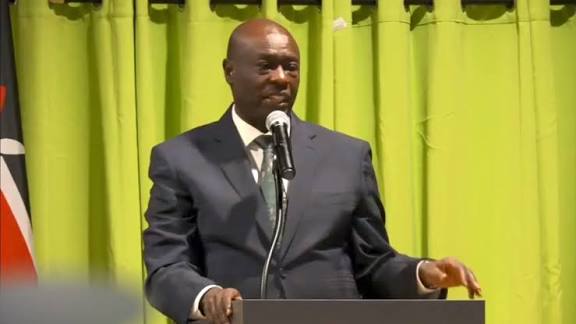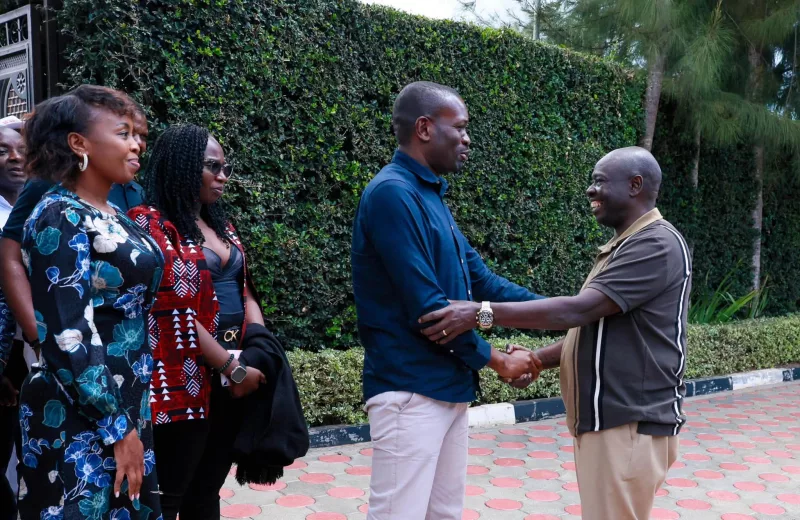
Githunguri Member of Parliament Hon. Gathoni Wamuchomba has accused Wamunyoro of deep-seated misogyny, alleging a long-standing pattern of verbal attacks against women leaders and tolerance of hostility directed at female politicians.
In a strongly worded statement, Wamuchomba claimed that during Wamunyoro’s impeachment process, two women Members of Parliament publicly stated that he verbally attacked them using “unprintable words,” remarks that, she noted, are recorded in the parliamentary Hansard.
She further cited a recent funeral ceremony in Kigumo, where Lamu MP Hon. Monica Muthoni was allegedly attacked by Wamunyoro’s supporters after expressing her opinion. According to Wamuchomba, Wamunyoro neither condemned the incident nor defended the MP. Instead, she alleges that his subsequent remarks appeared to justify the hostility directed at her.
“He uttered not a word when Hon. Monica Muthoni was attacked, and in his speech, he affirmed that she deserved the wrath,” Wamuchomba said.
The legislator also accused Wamunyoro of a history of verbally attacking prominent women leaders, including governors Anne Waiguru, Susan Kihika, and Cecily Mbarire. She referenced the Mbeere North by-election, claiming that his repeated attacks on Governor Mbarire galvanized women voters to rally behind Hon. Wamuthende as both a show of solidarity and a protest vote.
“Women collectively ganged up and elected Hon. Wamuthende in defence of their governor,” she said, adding that the outcome dealt Wamunyoro a decisive political blow.
Looking ahead, Wamuchomba argued that women remain the most effective counterforce to what she described as Wamunyoro’s “verbal venom,” asserting that female political unity has consistently exposed and rejected his conduct.
She also dismissed claims linking Wamunyoro to a broader regional political movement, stating that the Maskio Party is owned by Cleo Malala and Hezron Obaga, and insisting it is not a “Mlima” party.
“He is a masquerader,” Wamuchomba concluded, framing the debate as not just a political contest but a broader struggle against what she termed the normalization of hostility toward women in leadership.