Cleophas Malala has dismissed the government’s plan to exempt individuals earning below Ksh30,000 from paying certain taxes as a calculated move to secure President William Ruto’s re-election.
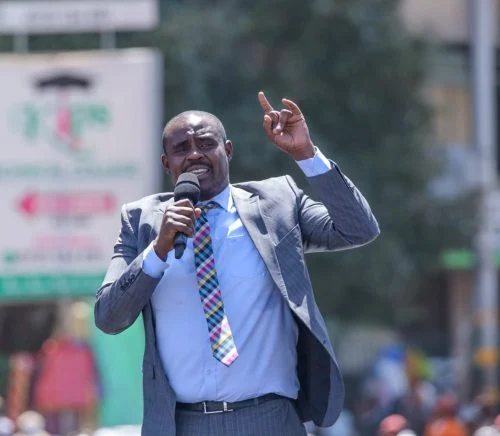
Malala, who serves as Deputy Party Leader of the Democracy for Citizens Party, made the remarks during a United Opposition rally in Nyamakima on Monday, February 16, 2026.
The rally followed a failed attempt by opposition leaders to meet the Inspector General of Police, Douglas Kanja, at Vigilance House.
“A Finance Bill Strategy for Votes”
The outspoken former senator argued that the proposed tax relief under the upcoming Finance Bill is not driven by economic goodwill but by political survival.
According to Malala, the President is seeking to win back public support after facing criticism over previous tax measures.
“Huyu Ruto amejua anaenda nyumbani, ameamua Finance Bill ya June ati anapunguza ushuru kwa watu ambao wana earn Ksh30K and below. Tungependa kuambia Kasongo tunajua ujanja wako; wewe unataka kupigiwa kura na baada ya kuregeshwa utaregesha huo ushuru juu,” Malala said.
Translated, Malala accused the President of attempting to lower taxes temporarily to win votes, only to reinstate them once re-elected.
Opposition Intensifies Pressure
The remarks come amid rising political tension as opposition leaders continue to criticise the government’s economic policies, particularly tax reforms introduced through successive Finance Bills.
Malala claimed that Kenyans are wary of policy shifts close to election periods, warning that voters should scrutinise government promises carefully.
Growing Political Temperatures Ahead of 2027
With the 2027 general elections approaching, tax policy has emerged as a central campaign issue. The proposed relief for low-income earners could significantly impact millions of workers if implemented.
However, opposition leaders argue that economic reforms should be consistent and sustainable rather than politically timed.
As debate around the Finance Bill intensifies, the tax exemption proposal is likely to remain a flashpoint in Kenya’s evolving political landscape.