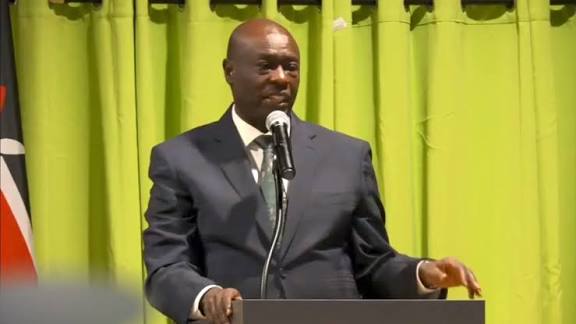
Moses Kuria has dismissed growing fears of a sudden rise in fuel prices, assuring Kenyans that the current review cycle will not reflect global tensions affecting the oil market.
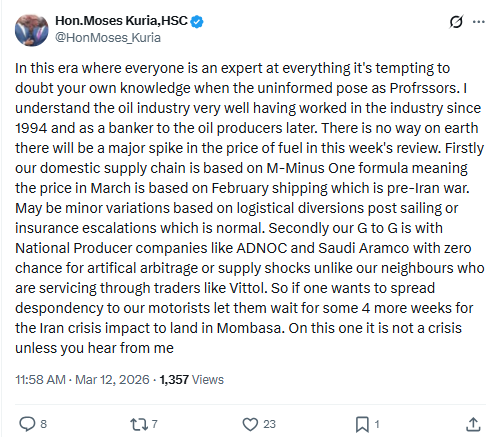
Speaking through a post on his official X account on Thursday, March 12, 2026, Kuria said speculation circulating online about an imminent fuel price spike was misplaced.
According to Kuria, Kenya’s fuel pricing mechanism is structured in a way that prevents immediate global shocks from directly affecting pump prices.
He explained that the country uses the M-Minus One formula, where fuel prices for a given month are based on shipments from the previous month. This means the prices under the current review are tied to February shipments, which were secured before the recent escalation of tensions in the Middle East.
“In this era where everyone is an expert at everything, it’s tempting to doubt your own knowledge when the uninformed pose as professors. I understand the oil industry very well, having worked in the industry since 1994 and as a banker to the oil producers later,” Kuria stated.
Direct Supply Agreements
Kuria also noted that Kenya’s government-to-government fuel supply arrangements with national oil producers help stabilise the market and reduce the risk of supply disruptions.
Through these agreements, the country sources petroleum products directly from companies such as Saudi Aramco and ADNOC.
He contrasted this with some neighbouring countries that rely heavily on international commodity traders like Vitol, which he said can expose markets to price volatility and artificial arbitrage.
Kuria urged motorists not to panic over rumours of an immediate price surge, noting that any impact from the ongoing geopolitical tensions would likely take several weeks before being reflected in local fuel prices.
He added that the situation would only begin to influence the market once shipments affected by the global crisis start arriving at the port of Mombasa.