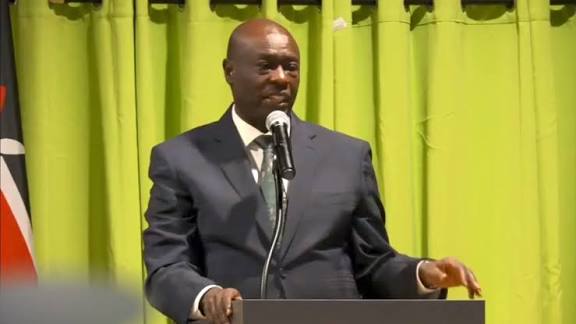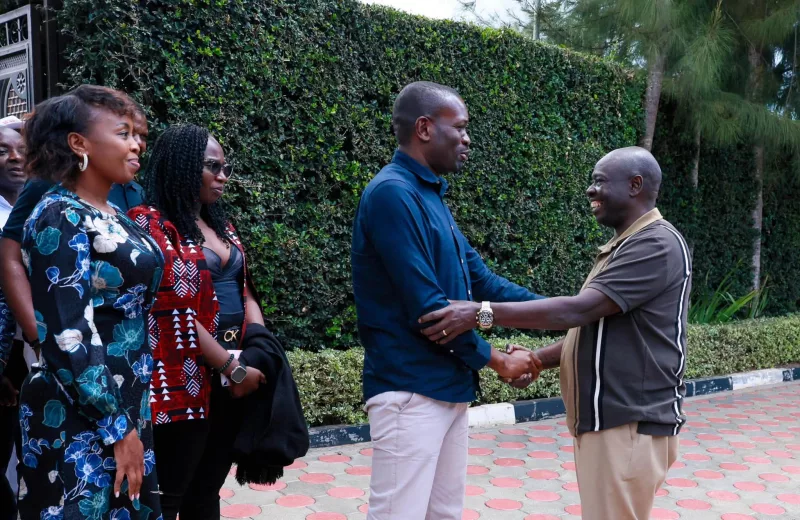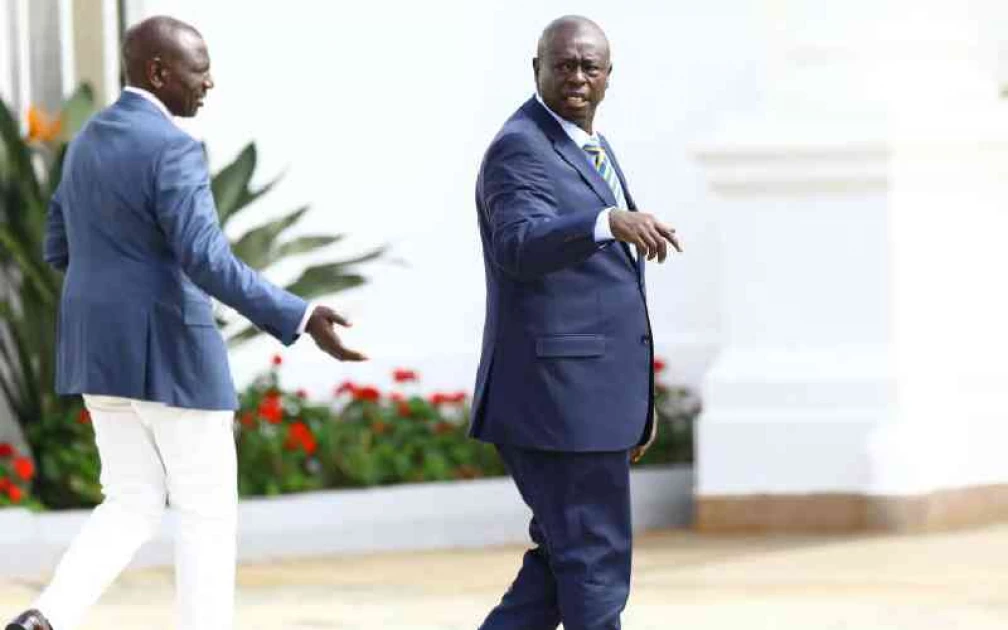
The race for Kenya’s “House on the Hill” has taken an unexpectedly comedic turn. President William Ruto and his former deputy, Rigathi Gachagua, two of the country’s most prominent political figures, have moved beyond standard campaign messaging. Instead, they’ve chosen to spar publicly over each other’s physical appearances.
The verbal jousting started when Gachagua, speaking at a United Opposition event in Kiambu, quipped about Ruto’s weight loss, prompting laughter from attendees. “How much is enough, Mr Ruto? Unataka pesa ngapi? Si mmeona amekonda mpaka maskio imekuja juu?” he asked.
Ruto’s response was swift and biting. He mocked Gachagua and other opposition leaders for gluttony and suggested they hit the gym. “Your head is swollen, and your tummy is almost ripping the shirt apart. Tafuteni gym kwanza muende mfanye exercise kidogo,” he said, emphasizing discipline and alertness.
Ready for a Verbal Brawl
Despite the playful insults, Ruto maintained that his focus remains on governance. “If you want us to go down that road, I’m ready for you. 1% of my time, I’ll deal with you… 99% of my time, I will serve the people of Kenya,” he vowed.
Observers note that this type of “personality politics” isn’t unique to Kenya. Globally, leaders have long used charisma and personal attacks to shape public perception, sometimes overshadowing substantive policy discussions.
When ‘Low’ Becomes the Norm
In today’s social media-driven era, physical jabs and witty insults spread fast, shifting attention from governance to spectacle. Analysts compare the trend to the Obama era, where Michelle Obama famously said, “When they go low, we go high,” promoting dignity in the face of attacks.
In Kenya, however, the campaign culture appears to have embraced a different approach: the more biting and outrageous the remark, the greater the traction. The presidential race has become a public arena for testing humor, resilience, and the limits of political decorum.