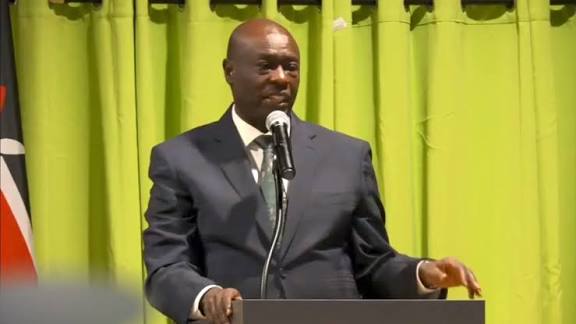
Former Deputy President Rigathi Gachagua on Monday launched a scathing attack on Kenya’s leadership, vowing a sweeping crackdown on corruption and impunity if political change is realised in the 2027 General Election.
Addressing residents in Kiserian, Kajiado County, the former Deputy President said there would be “no escape route” for what he described as “liars, corrupt oligarchs, looters, thieves of public resources and land grabbers.”
“On August 10, 2027, there will be no escape route for liars, corrupt oligarchs, looters, thieves of public resources, land grabbers, and all manner of leaders who have stained Kenya with innocent blood of our citizens,” he said.
Gachagua framed his remarks around growing public frustration over the state of the economy, unemployment and access to basic services, painting a bleak picture of the country’s current trajectory.
“Kenya’s economy is hurting the worst in history. Our young people have no jobs, their education has been badly mutilated. Kenyans have no healthcare,” he said.
He accused unnamed leaders of presiding over widespread land grabbing, singling out Kajiado as one of the hardest-hit regions.
“Kajiado County, like every corner of our nation, has suffered land grabbing of the worst magnitude,” he said.
The remarks come amid heightened political activity across the country, with leaders stepping up grassroots engagements and sharpening their messaging ahead of the next election cycle.
Gachagua also pointed to infrastructure challenges in Kiserian, saying poor roads and underdevelopment continue to burden residents despite repeated promises by successive administrations.
“Kiserian residents continue to suffer bad infrastructure atop all other ills,” he said, adding, “We shall get back better our country.”
Even as he struck a combative tone, the former Deputy President sought to reassure residents, urging them to remain hopeful.
“Kiserian remain strong, good days lie ahead. God bless you,” he said.
His remarks signal an intensifying political contest, with leaders increasingly invoking economic hardship, governance failures and accountability as central themes in the run-up to 2027.