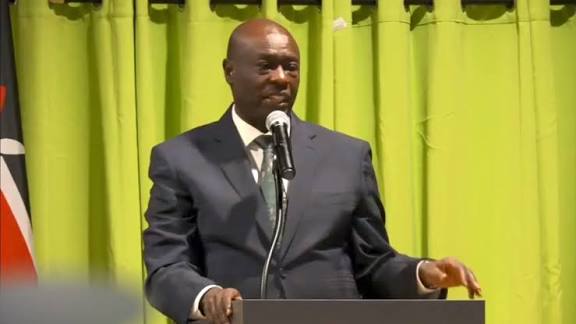
Kuria Raises Concern Over Rising Protest Culture
Senior Economic Advisor Moses Kuria has expressed concern over the growing frequency of anti-government demonstrations, warning that constant protests may gradually lose their effectiveness among the public.
Speaking amid heightened political activity and recurring street demonstrations, Kuria acknowledged that peaceful protests are protected under the Constitution but argued that excessive mobilisation risks creating public fatigue.
Fear of Public Desensitisation
According to Kuria, when demonstrations become too frequent, citizens may eventually stop paying attention, even when legitimate grievances are being raised.
He suggested that repeated disruptions could weaken the emotional and political impact that protests are meant to generate, making it harder for genuine accountability campaigns to resonate with ordinary Kenyans.
Economic Stability Also at Stake
Kuria further warned that prolonged unrest and recurring protests could negatively affect business operations, investor confidence, and broader economic stability.
He noted that frequent disruptions to transport, trade, and daily activities may hurt livelihoods and slow economic recovery efforts.
Calls for Dialogue Instead of Street Action
The advisor urged political leaders, civil society groups, and activists to prioritise dialogue and structured engagement when addressing national concerns.
He argued that sustainable solutions require conversation and policy engagement rather than relying solely on street demonstrations to pressure the government.
Backdrop of Political Tension
His remarks come as Kenya experiences renewed political mobilisation driven by concerns over the high cost of living, governance issues, and demands for reforms.
Recent demonstrations across parts of the country have reignited debate over the balance between constitutional freedoms and economic stability.